For my final post of this trip, here are some other things I wanted to share about my visit to Japan that weren’t lengthy enough to warrant their own blog post by themselves.
Seasonal foods
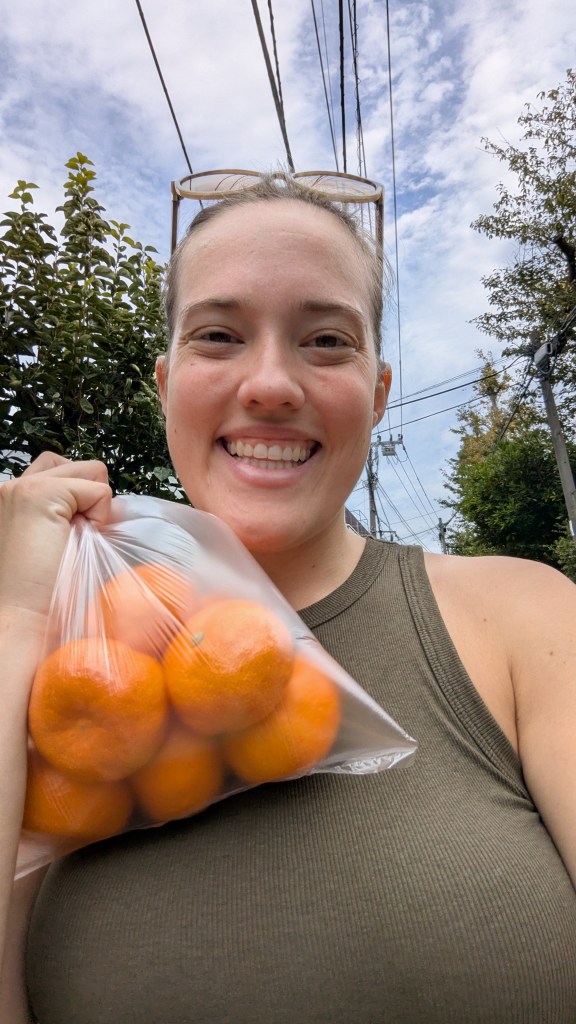
I ate a lot of muscat grapes, walnuts, sweet potato, and みかん (mikan, mandarin orange). We were nearing the end of Muskat grape season, in the midst of walnut and sweet potato season, and the beginning of mikan season.All the restaurants celebrated the seasonal produce in their dishes!
I was especially on the hunt for mikan! I love canned mandarin oranges in the USA, and these were very much like that. Very juicy! みかんが大好きです! (Mikan ga daisukidesu!, I love mandarin oranges!) I ate as many as possible!

宝くじ(Takarakuji, Lottery)
I played the lottery. There was a lottery ticket stall near the train station, and I decided to play. I was not alone, the line was about 8 people long at all times. The sales lady did not speak much English and was not very excited to facilitate my transaction, however the outside speaker system, in English, every couple minutes said to come try the lottery. So I did.

I bought 2 different scratchers and 2 halloween lottery tickets that will be announced later this month. I stepped to the little table on the side and scratched my tickets after translating the rules in google translate. They were pretty simple games. I lost on the first one, and I won 200¥ ($1.33) on the second one. It’s pretty common to win something on the scratchers. I was excited!


I joined the line for a second time, because the basic rules of gambling is to play again when you win. The second time, I didn’t win.
I left the halloween lottery tickets with Seika, and we will see if we win!
音楽 (Ongaku, Music)
Japan is such a musical society. Even the trash truck sings a song. I had the Giants Baseball song stuck in my head for a week! This also felt like a good marketing campaign – I was still cheering for the Giants well after the game had ended! There are songs everywhere. In the train station, there were songs. There were lots of catchy commercials. There was even a song that played to tell the kids to head home for dinner if they were outside playing. I had the Family Mart convenience store stuck in my head for an evening and didn’t even remember where it was from until I sang it and Seika’s family was like “Family Mart!!”
Songs are so associated with memories as well. I really appreciate how many songs and jingles there are.
新しい食べ物 (Atarashī tabemono, New foods)
We ate meals family style, which was awesome because it allowed for me to try foods I wouldn’t otherwise order on my own, and if it ended up being a food I didn’t really like, the rest of the family could swoop up and finish any part that I might might not otherwise want.
The family style dining is actually family style. I mentioned that in America, we would all mentally portion the fraction of the dish that each person would get, and we wouldn’t stray from that regardless of if we are splitting the bill evenly or not. Here in Japan, you all eat from the communal dish until it is finished, although you will likely leave one piece until the very end to ensure someone else who really wants it, eats it. 遠慮の塊。(Enryo no katamari, a bundle of refrain: not taking the last bite because wanting to offer it to everyone else).
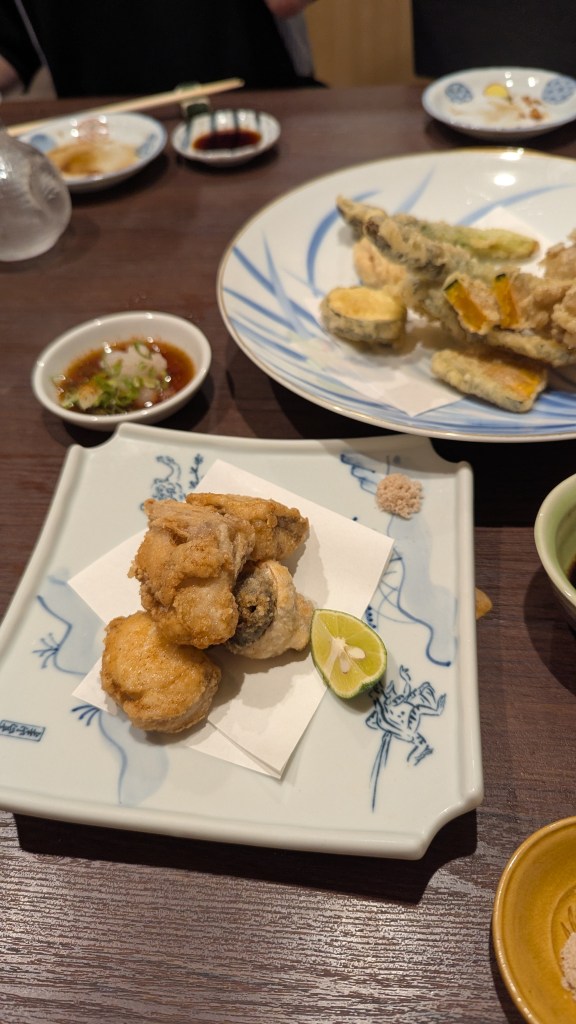
I tried blowfish, and it was delicious. I ate the mouth part, which apparently has a lot of collogen. It was fried and actually resembled the flavor and texture of chicken. I know people who eat unfamiliar meats always describe it with the saying “it tastes like chicken.” But blowfish actually does.
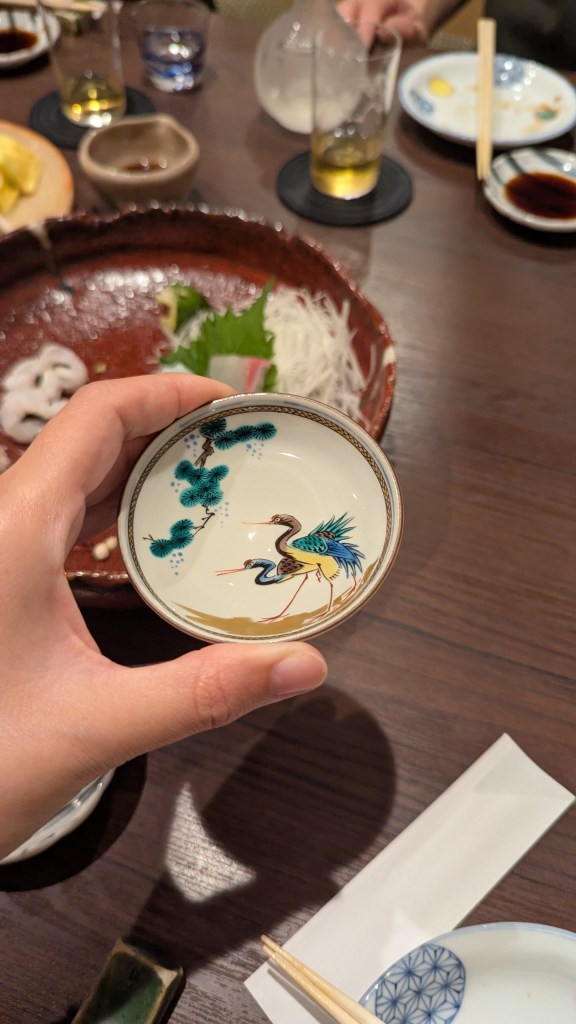
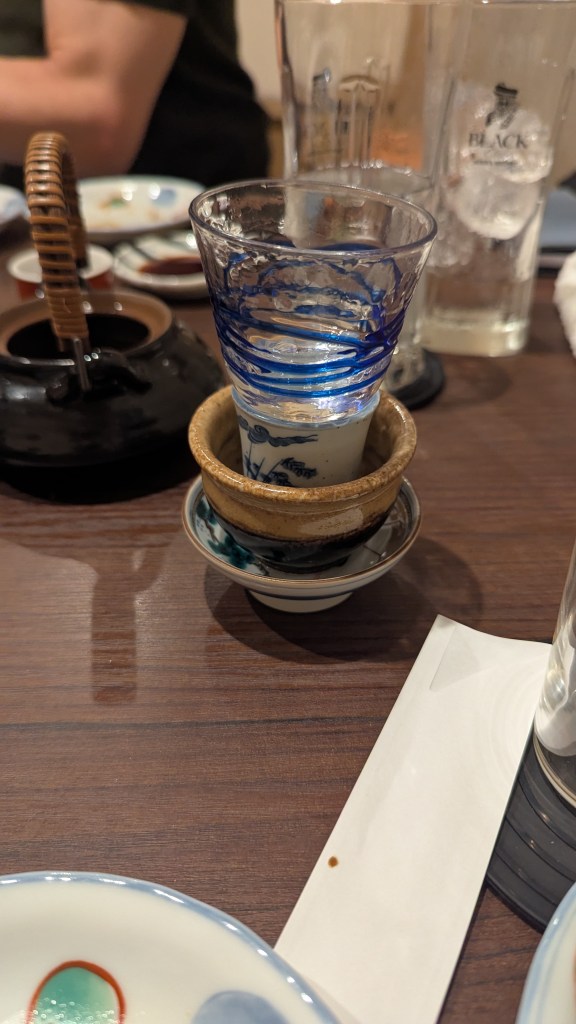
I would have eaten more blowfish, but I was too distracted by the conversation, the other foods, and also the 酒 (sake). We ordered rounds of sake, and with each round of different sake the waitress presented us new the sake glass options. I opted for a new one each time because it is a fun and decorative experience. Here is my collection of sake glasses.
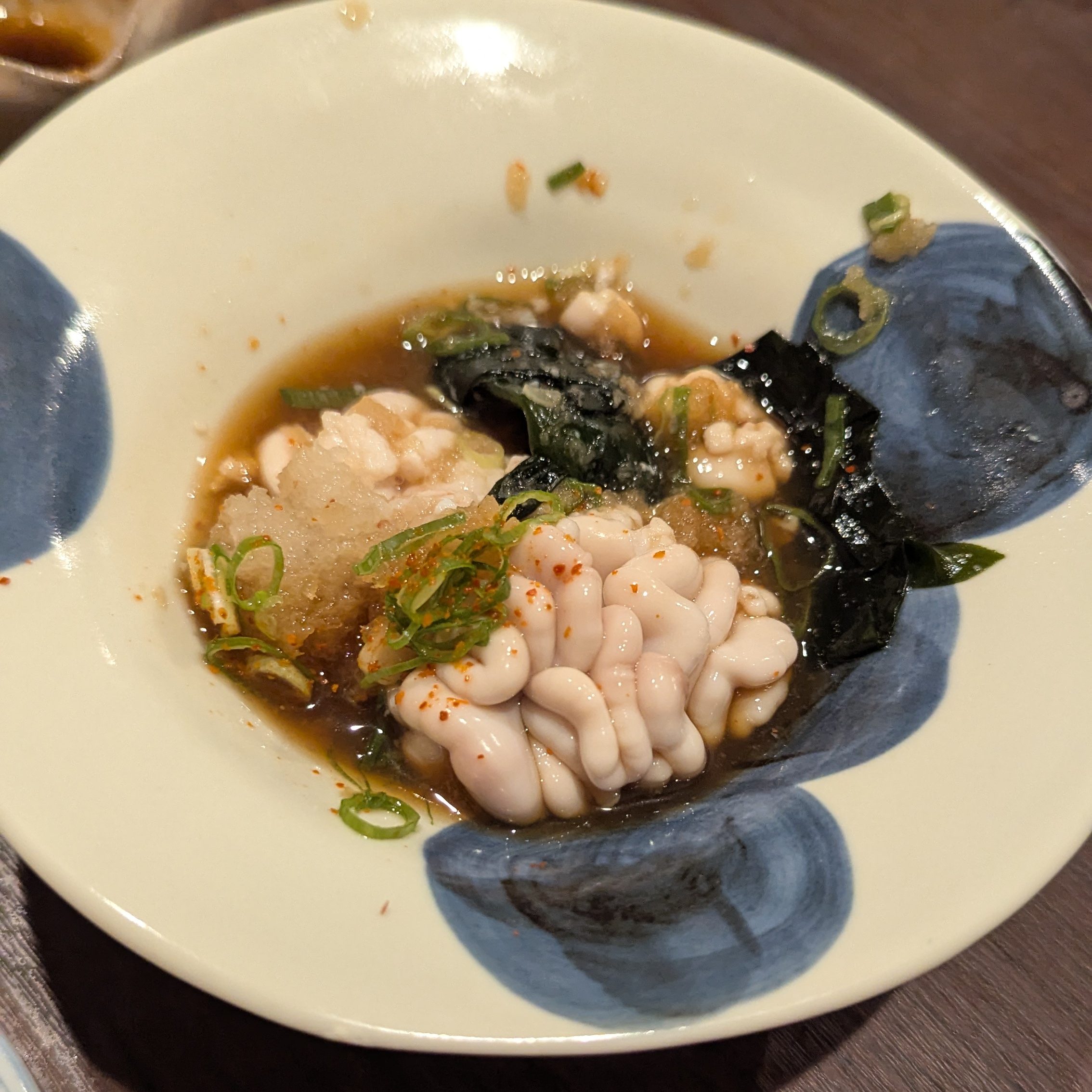
During my dining experiences this trip, I ate a few different types of fish eggs, but I also got the opportunity to try fish ovary. If I hadn’t known, I would have thought it was some sort of brain. The family really liked it, so there was no pressure for me to even try it, but I wanted to. It was extremely creamy, almost like a sauce. I only ate two small bites, but it was nice. I appreciate how the Japanese palette celebrates more parts of the animals than the American palette. Where do the intimidating parts of the animals go in the American market? Boiled as part of a broth? Sold to other markets? Thrown away?
日本語 (Nihongo, Japanese Language)
Part-way through my trip, I realized that I was thinking a bit Japanese, at least in the since of sounds to communicate. Instead of “Wow!” “What?” “Huh?” “Yea”, I was expressing myself with “”Ehh!?” “Eh?” “Nnn.”
Like instead of being like “What is that?” I’d either in my mind or out loud be like “Eh?”
Instead of being like “I’m lost, what direction am I supposed to be going?”, I’d be like “Eh?”
Instead of “Yea, I get what you’re saying”, I’d be like “Nnn.”
Instead of “Wow!!!!”, I’d be like Ehhh!?”
That caught on quick. My mind is a sponge, and I think being around locals accelerated my pace even more because I was able to observe interactions and ask questions about frequent sounds and words that I was hearing. I love the communication style of the Japanese. They are very patient. There is less interrupting because the meaning of the sentence isn’t completed until the very end of the sentence.
I also found myself frequently saying a linguistic souvenir from my previous travels in Greece ώπα! (Opa!, Oops!) – probably because I made a lot of mistakes and was more clumsy than normal. Seika might start saying “Opa” based on how many times I said it ha!
自販機 (Jihanki, Vending Machines)
There are so many vending machines in Japan. You see them everywhere! The ratio works out to about 1 vending machine for every 23 people. If I had more time in Japan, I would have bought more unique items from vending machines. The most interesting thing I purchased was a made-to-order coffee. I wanted to spend my time and energy on foods and drinks in restaurants. But I did take some pictures of the most interesting ones I saw.
This vending machine sells fresh fish. It was located at Tsukiji Fish Market.

This one sells desserts.
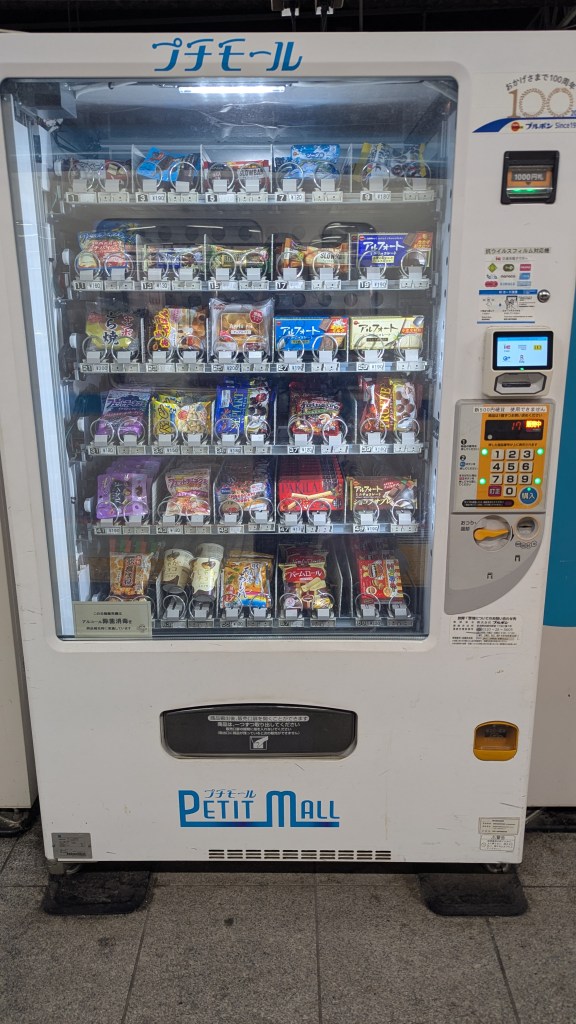
This one sells beverages, which was the most common vending machine that I saw.

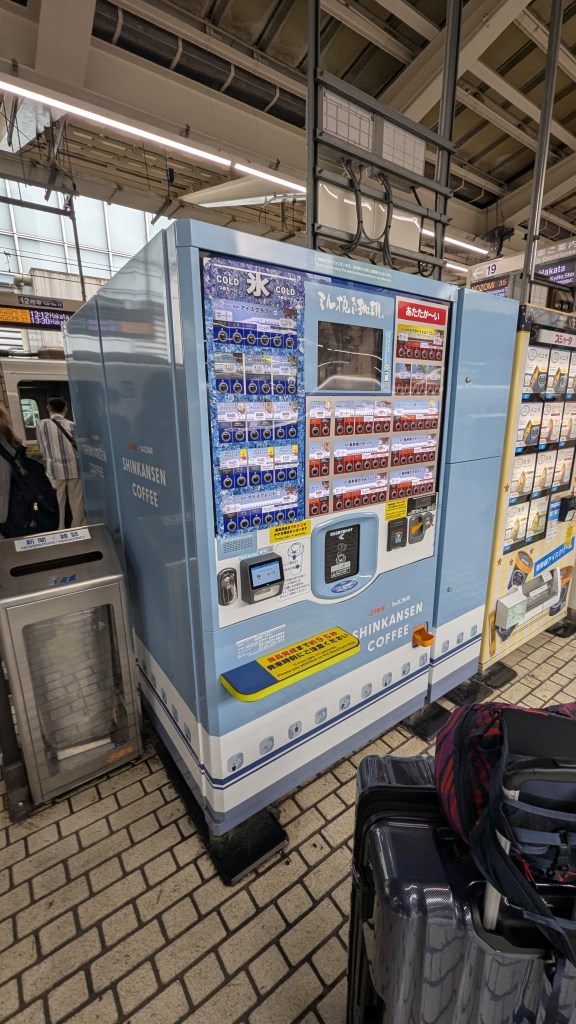
This one on the Shinkansen platform sells made-to-order coffees. Here I bought an iced chocolate matcha with whipped cream.

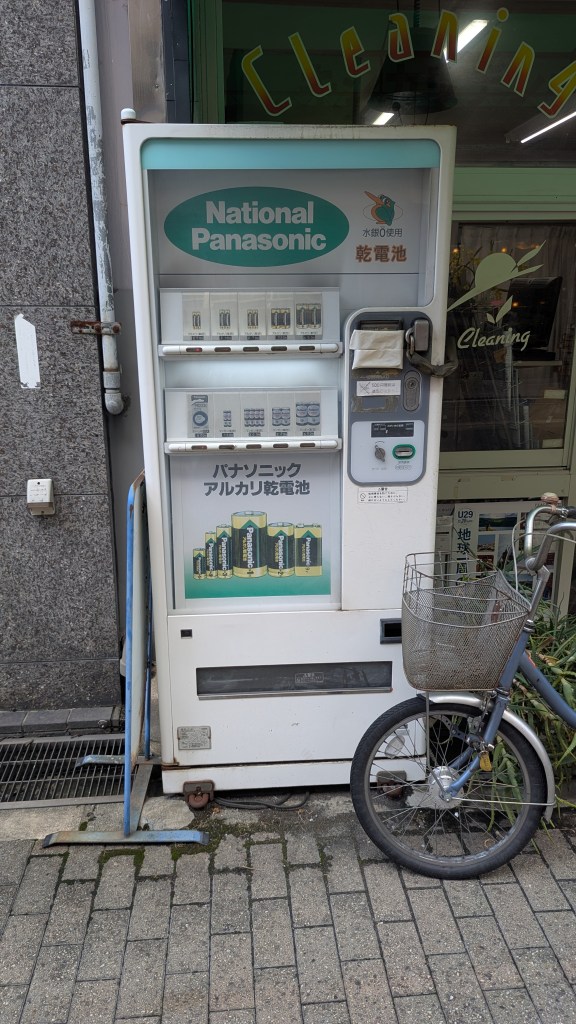
This one sells batteries.
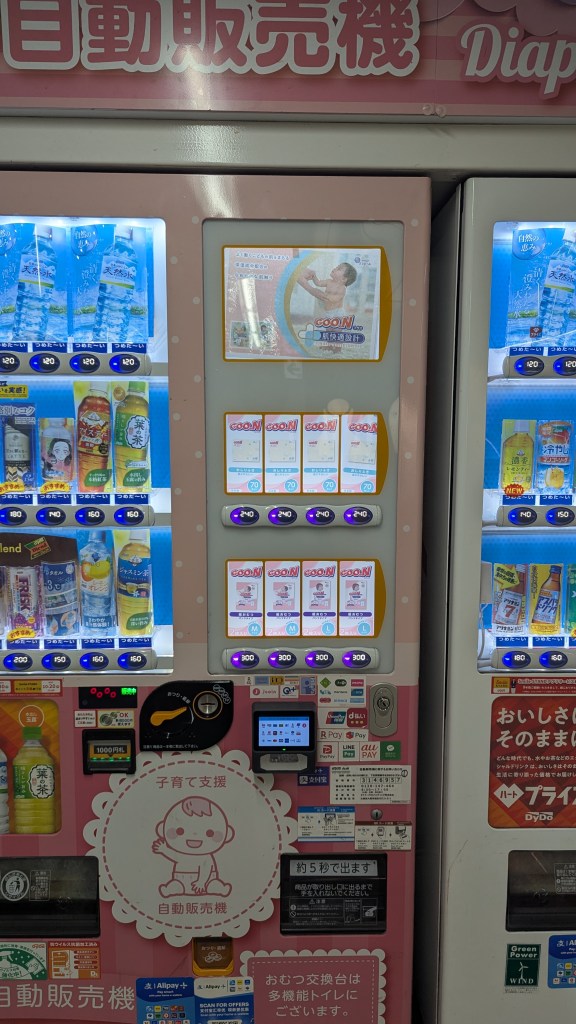
This one sells a variety of things, including diapers.
人間工学 (Ningen kōgaku, Ergonomics)
As a visitor, and a fan of user experience, I am absolutely elated by the user experience and amount of context provided to people in the Japanese society. I was in awe of the amount of information provided in every single experience, especially the train instructional screens. The screens would show you the train car, the stop you were approaching, which side the doors would open on, which direction you were headed, the upcoming stops, and all in both Japanese characters and romaji.
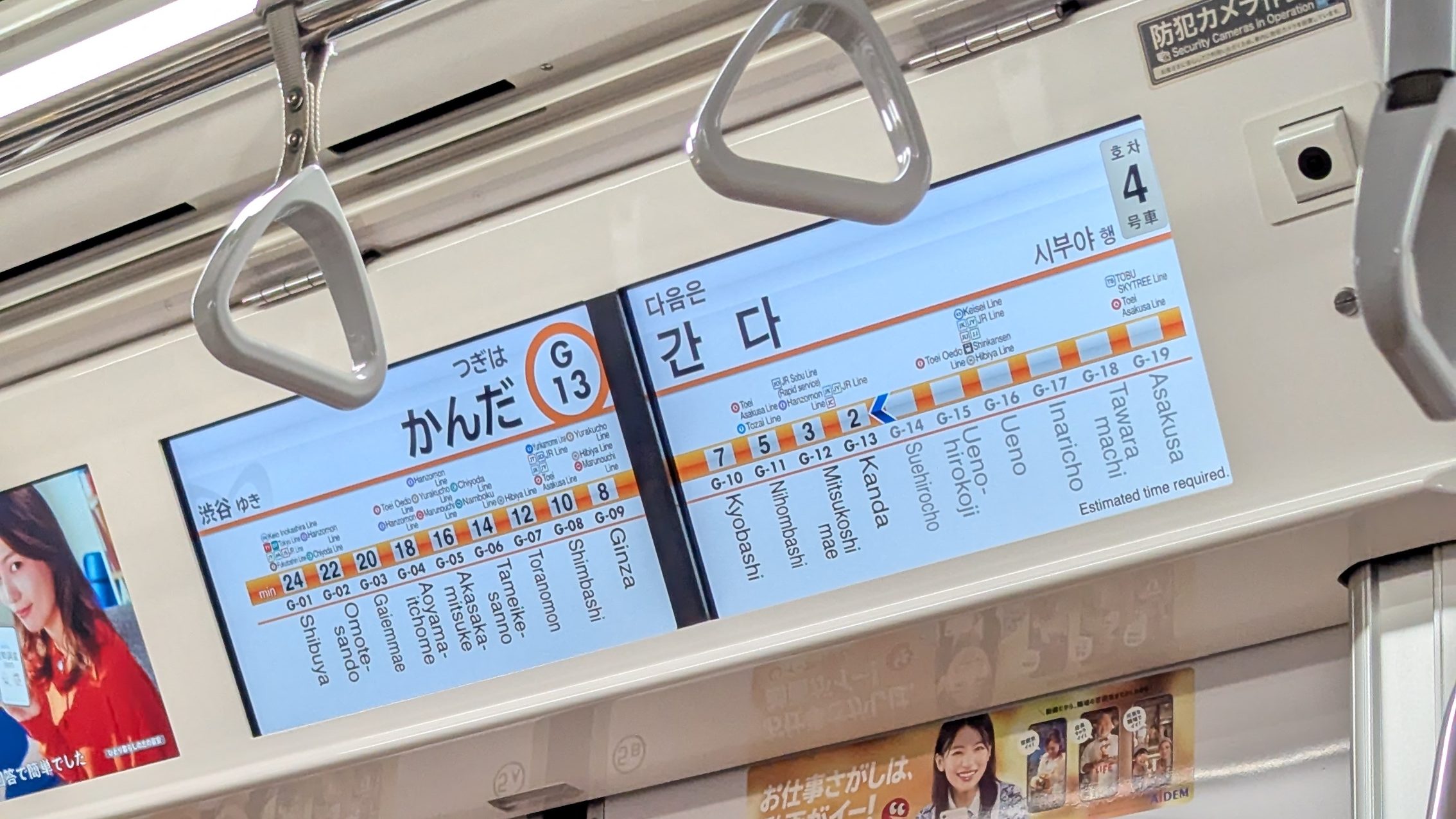

Please excuse the shakiness of the video, I was on a moving train.
In Japan, there were paths for blind people everywhere. The toilets were always clean and free and easy to locate (and bidets!!!). There were specific smoking sections partitioned off outdoors where the rest of the cities were smoke-free. Every meal or even snack was served with a hand towel to clean your hands before eating. The list of my enthusiasm and amazement could go on forever! From my perspective, the Japanese society is so helpful and kind to people. I am so grateful to have experienced it all.
—
Thanks again for reading along on my travels!
ありがとう ございました (Arigatōgozaimashita, The past tense version of thank you since this interaction is over)
またね! (Mata ne!, See you!)

 GoAmyGo
Leave a comment