I heard that Maltese food was unique and had a lot of international influence, and I wanted to really learn and experience, so I booked a guided food tour: The Valletta Street Food and Culture Walking Tour. It was incredible.
Not only did I try many different foods that I probably wouldn’t have ordered on my own, but also I learned a lot about the history of Malta and its interactions with different empires and eras.
Malta was given to the Knights of Rhodes by the king of Spain, after they were defeated and expelled from Rhodes. The Knights were noblemen who were crusaders and hospitalers.
The food is influenced by the Ottomans. At one point, 5,000 Ottoman slaves were left at at Malta, which increased the population from 15,000 to 20,000. That definitely influenced the food with an Ottoman influence.
Our first food was a Pastizzi, it is commonly filled with either peas or ricotta. The pea version has a curry taste, which is an example of spices appearing in the cuisine from their trading port. Curry, of course, is not endemic to Malta.
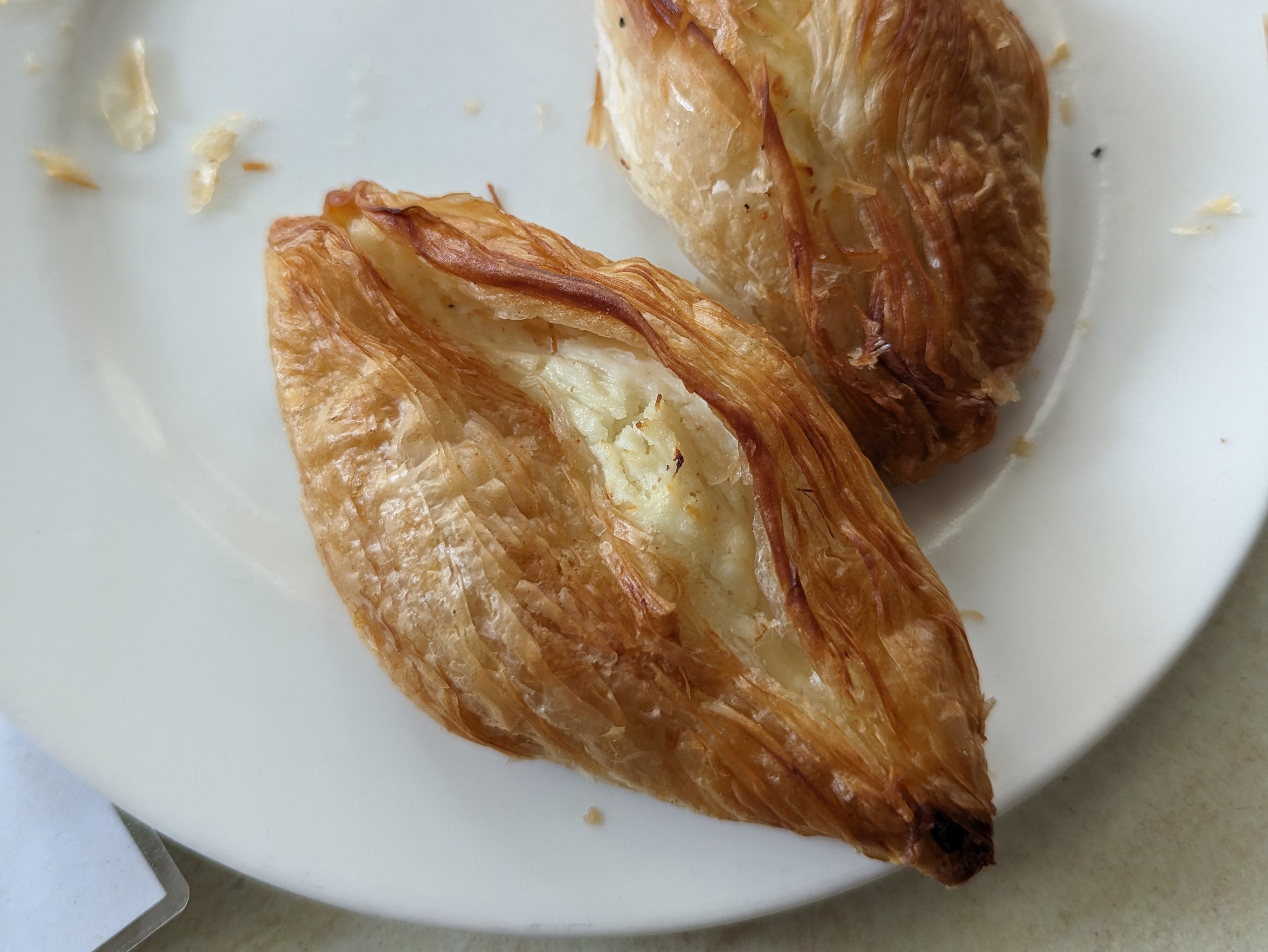
Malta is just south of Sicily, yet the Maltese have their own version of Ricotta. It is boiled three times instead of twice, and also boiled in salt water. The Maltese version is a bit firmer and a bit salter, of course.
Malta didn’t have many fresh water sources, and it definitely did not have ice, so the Knights brought ice from Mount Etna, from Sicily, daily. The ice that ended up being extra was turned into cold water or also granita.
Valetta was a well positioned port, great for defending from any attacks from the sea.
Our next food stop was to have a typical Maltese coffee. Originally, in Malta, Coffee was considered “the slave drink” or “the devil’s drink”. That name really resonated with me because a lot of people do drink coffee in order to have the energy to go to their job.
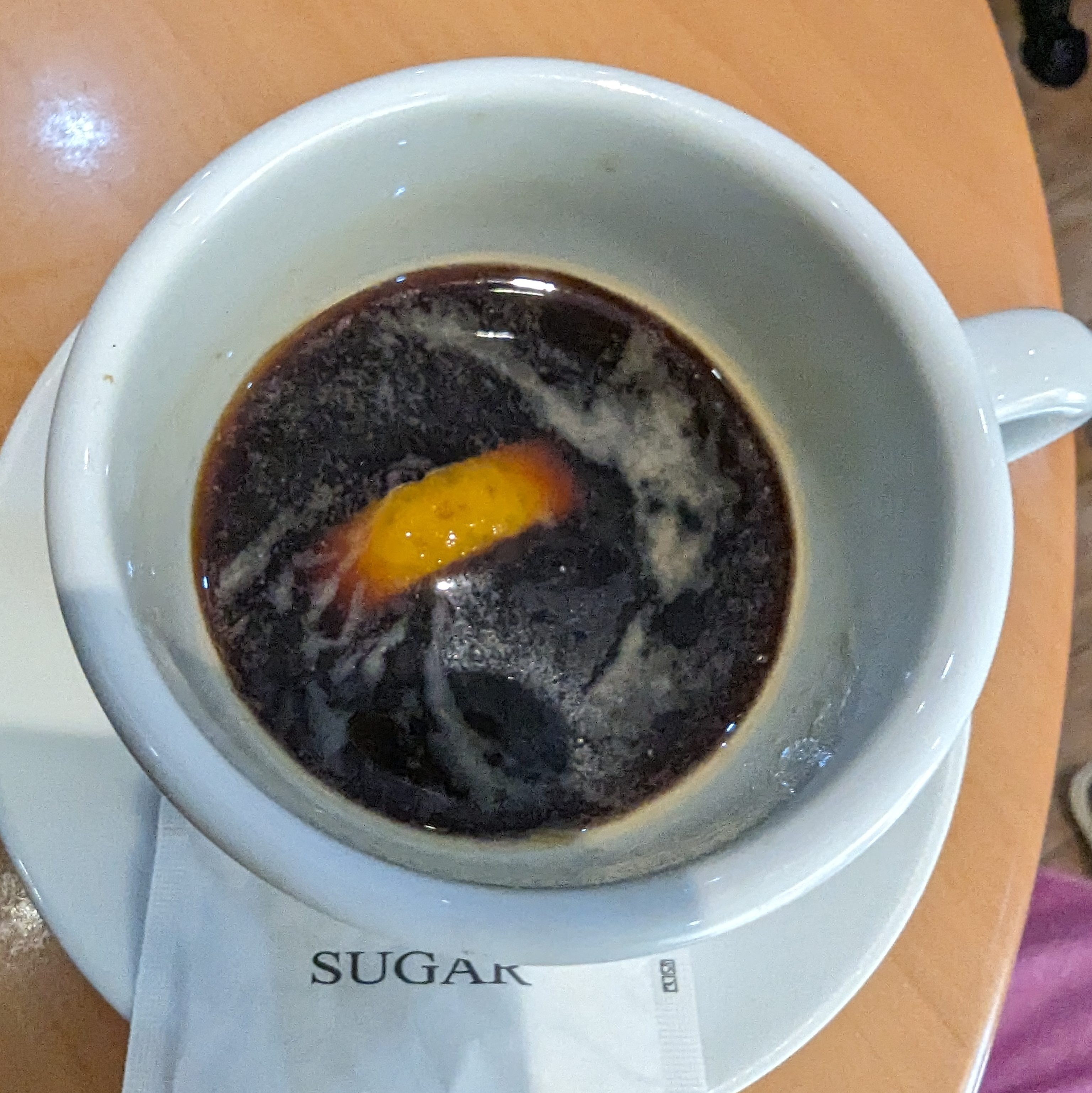
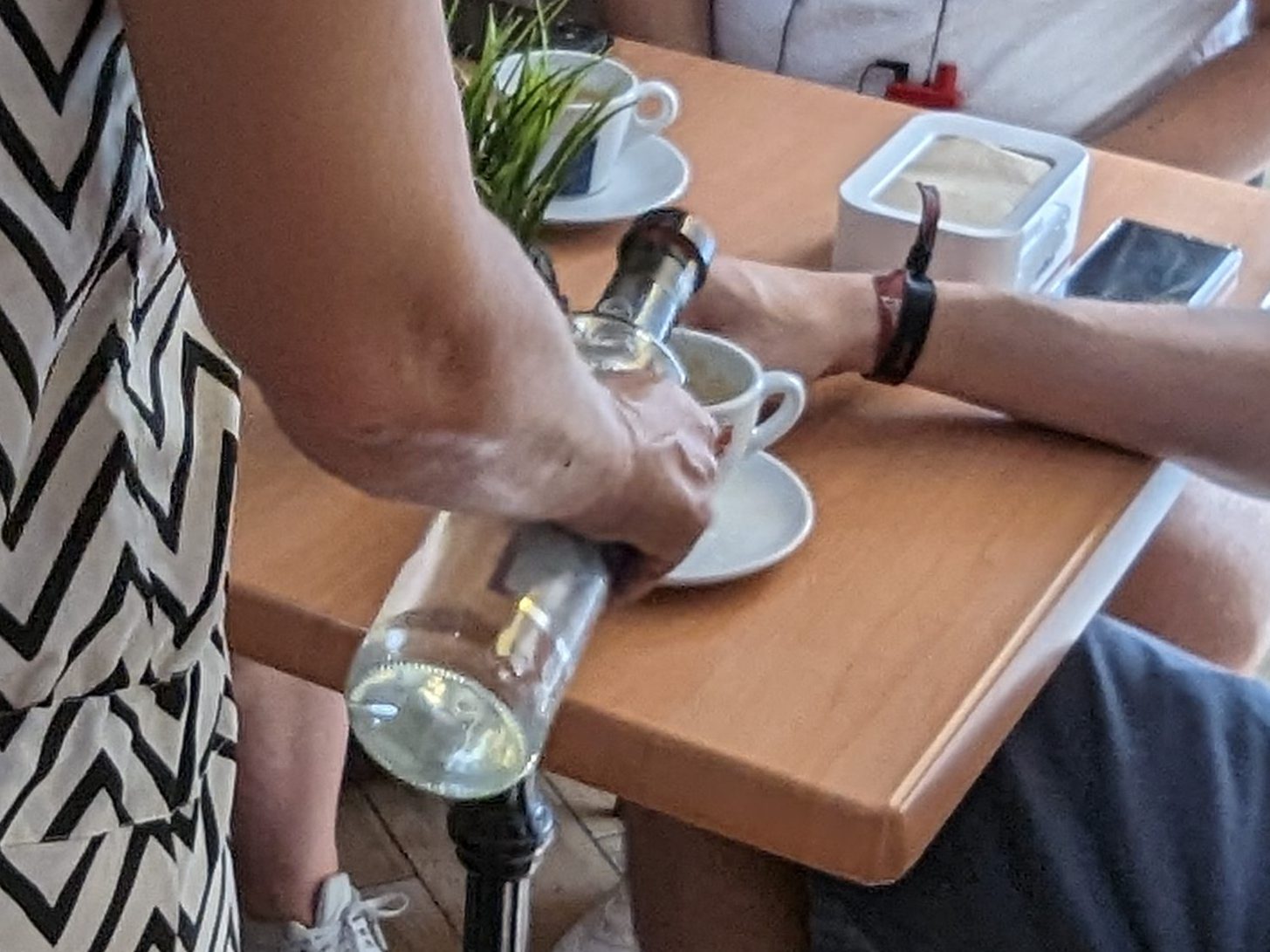
I did not like the Maltese coffee at all. It has quite unique ingredients. They add chicory cloves and anise seeds to their coffee, and they don’t add milk. The coffee contains an orange wedge. (The Maltese put orange in everything.) Also, it is common to add anise seed liquor, anisette.
The coffee was paired with a taste of a ring-shaped, date filled pastry.
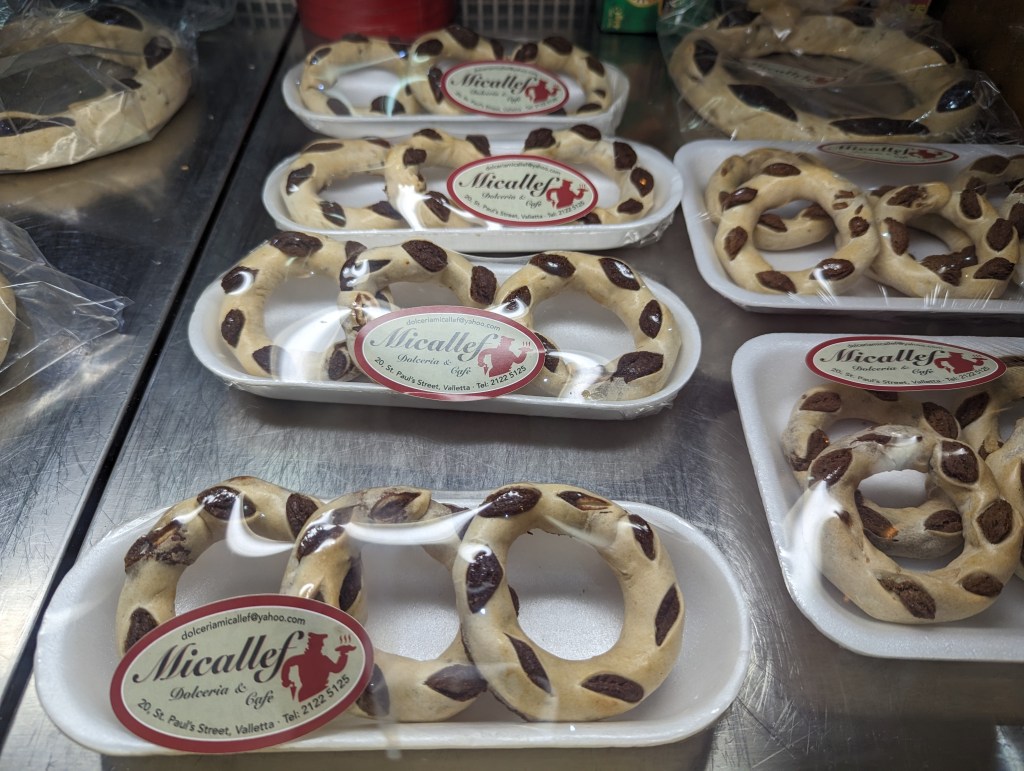
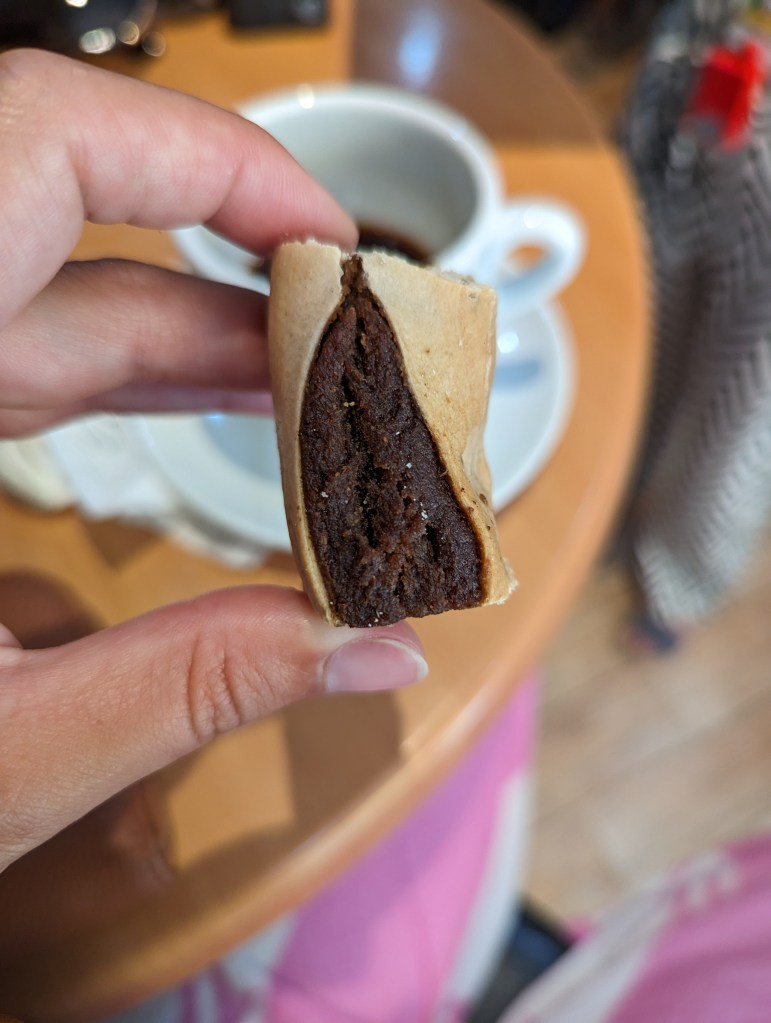
We did not have chocolate during the tour, but chocolate was probably introduced by the Spanish from South America.
I asked our guide how tourism affects Malta today. She said that the Maltese value foreign things, and that there are a lot of foreign restaurants. If she wants to eat traditional Maltese food, she will either make it at home or go to the villages.
She said the Maltese are always ruled by someone, even now, as they like foreign items and culture. Her son wants to move to England because he doesn’t like how sunny Malta is. But that is why the tourists visit, so we all like something different than what we are used to.
Valetta used to have more groceries and local stores; now it filled with restaurants and entertainment spots. Our guide took us to a remaining market to talk about the produce. Monday is the best time to come because the produce is freshest from the farmers. The green boxes contain the local produce.
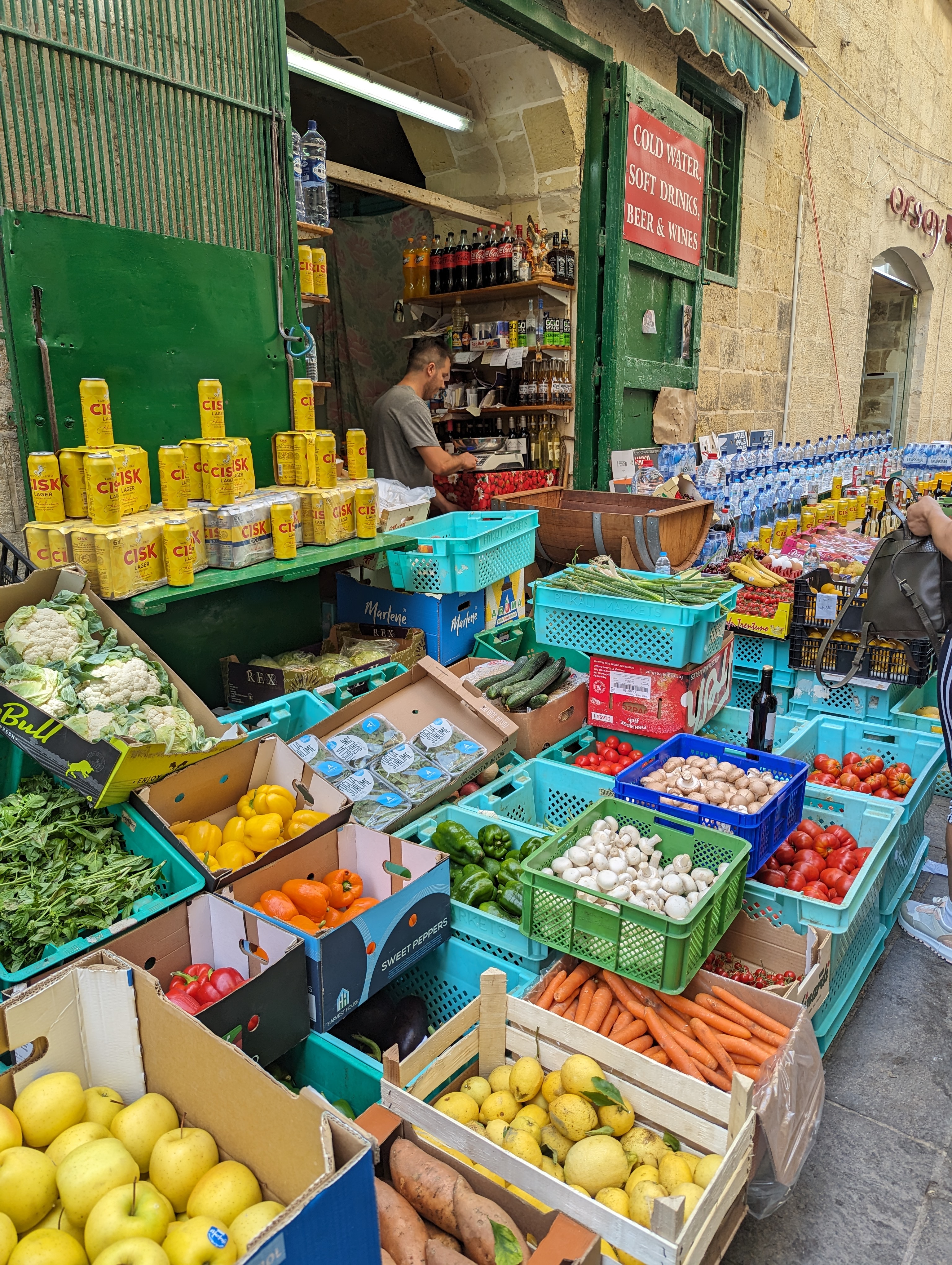
She then describes a few yummy dishes to make:
- Maltese stuffed pepper – It’s good cold or warm. She makes it to eat at the beach. I wasn’t quick enough to write down this recipe.
- Tomato on bread – squeeze tomato on bread with oil and salt. I’m not sure how good this would taste in America, our produce isn’t that fresh, but I will still try.
- Stuffed Zucchini
- Maltese potatoes – sliced potatoes, onion, fennel seeds in a pot, layered
We went to a sandwich shop and enjoyed a tuna sandwich on the unleavened bread.
Our sandwich had tuna in it, but she mentioned that the Maltese eat a lot of pork for religious reasons. It is to show they were Christians.
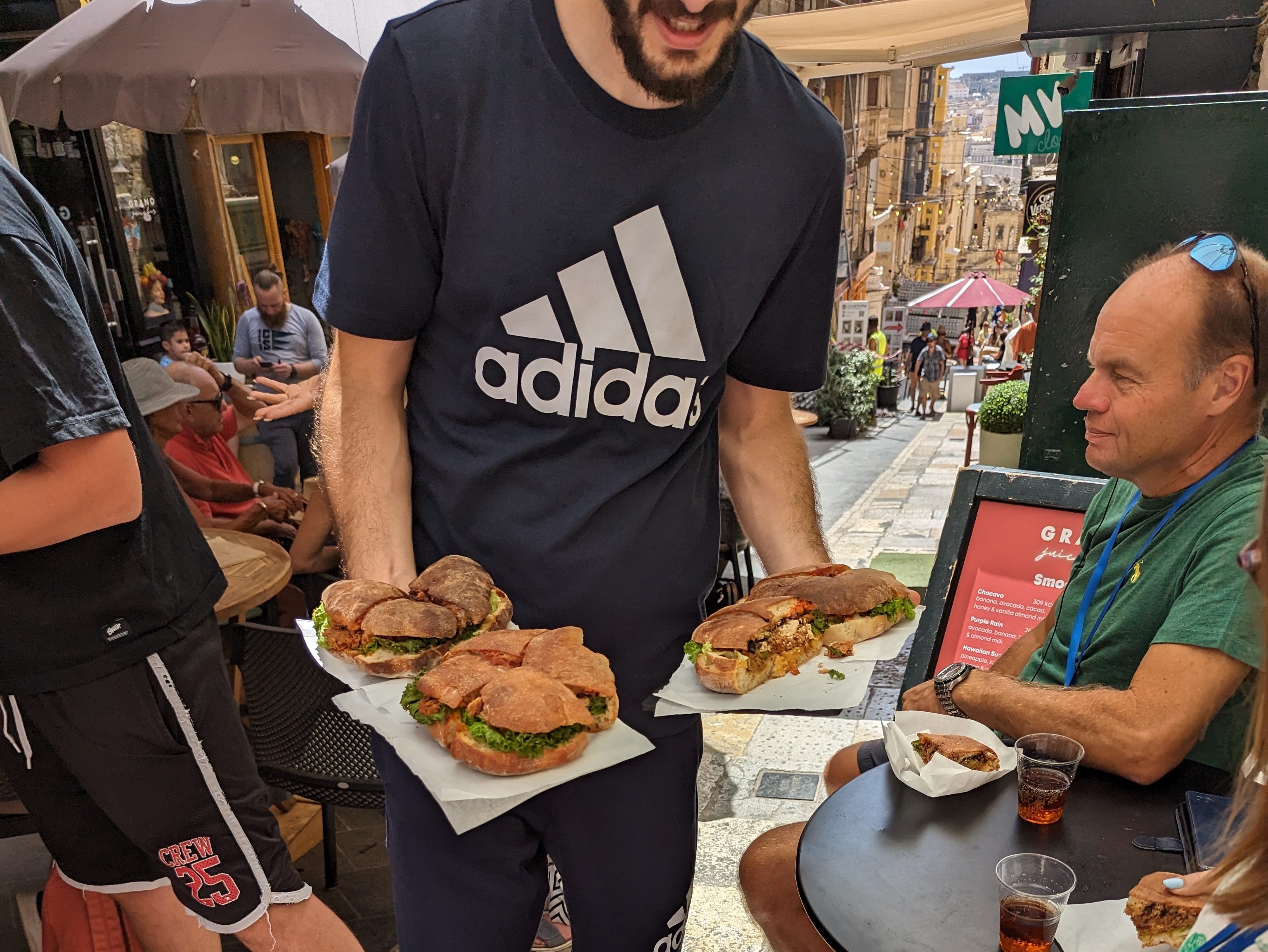
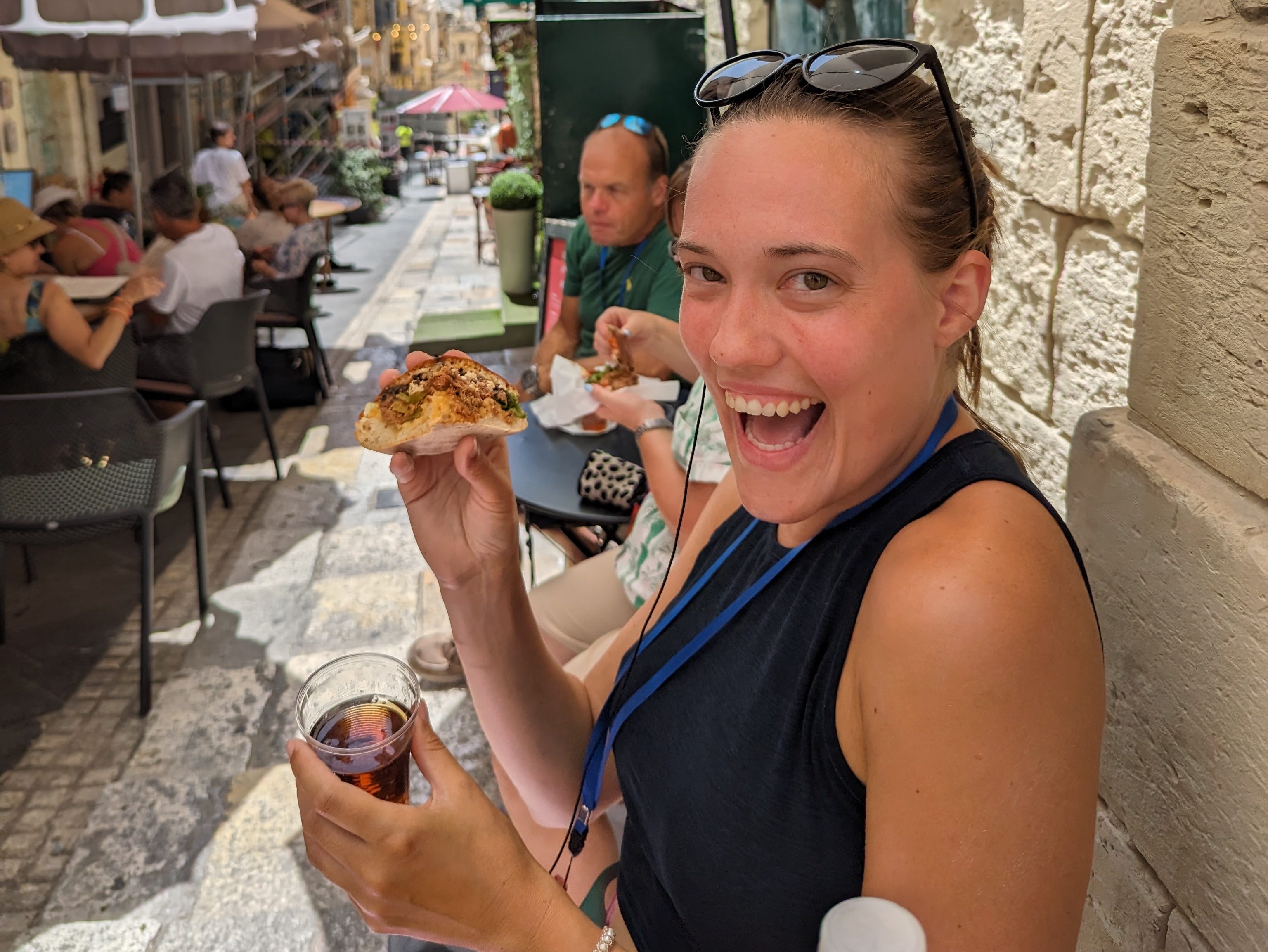
Bread was the main meal of the people, it was not to be wasted. The bread was cut somewhat ceremoniously using the sign of the cross with the knife to cut it into fourths.
She said the phrase: “Tell me what bread you eat, and I’ll tell you who you are,” which confused me a bit, but I think it explains the class difference between the two Maltese breads: one is unleavened, and one is a loaf.
The Maltese bread is listed on the UNESCO intangible heritage. I had never heard of the intangible UNESCO, but it makes sense to track these things. That is fascinating!
Here’s something interesting I found on Wikipedia relating bread to Malta’s culture.
There are a number of idioms in the Maltese language relating to bread as the basis of survival.[8]
- (Maltese: ħobżu maħbuż), his bread is baked, meaning the person is well-off.
- (Maltese: tilef ħobżu), he has lost his bread, meaning the person has lost their job.
- (Maltese: x’ħobż jiekol dan?),[9] what bread does he consume?, an expression used when enquiring after a person’s character.
- (Maltese: jeħtieġu bħall-ħobż li jiekol), he needs it like his daily bread, used when a person is in great need of something.
- (Maltese: ħaga li fiha biċċa ħobż ġmielha), something which provides a lot of bread, used to describe a profitable endeavour.
- (Maltese: ma fihiex ħobż), it procures no bread, used to describe a profitless venture.
Kinnie is a local bitter soda. It was a bit too bitter for my liking. Our guide mentioned Kinnie is good with red wine. Also places are beginning to serve a Kinnie Spritz which is like an Aperol Sprits, but with Kinnie.
We went to a spice shop. I planned to return to buy spices from the kind, smiling owner, but sadly the hours didn’t line up with my travel plans. She talked some spices and how the Maltese commonly use them:
- Carob syrup – add a bit of boiling water and whiskey, it’s good for the sore throat
- Bay leaf – for bolognese (I’m familiar with that). Sometimes they add curry to their bolognese.
- Ground cloves – go well with chocolate and coffee
- Anise seed – in coffee
- Coriander seed – in sausage
- Thyme – with cooked rabbit. Sometimes people will use cinnamon flavor cooked rabbit.
- Maltese olive oil – I wasn’t able to understand how it was unique, but I learned that it is rare.
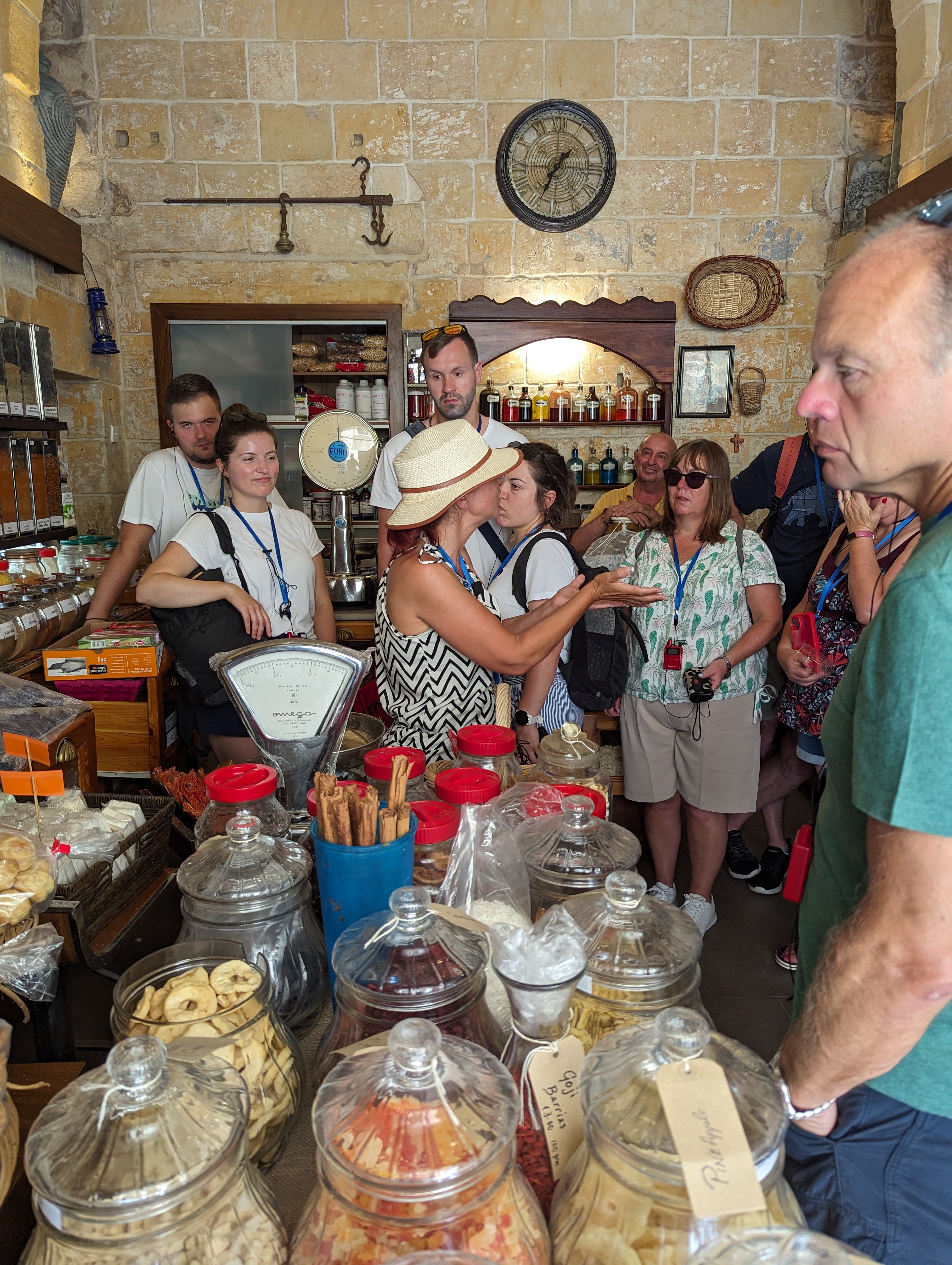
There are 2 historians discovering all the intangible culinary history of Malta. There used to be 7 types of cheese. Now, only the goat cheese with pepper (or without pepper) is the only 1 to survive. I’d love to learn more from these historians.
A lot of the Maltese recipes and culinary traditions were not considered important during the time, and now a lot of those recipes are lost. I am hopeful that the historians uncover more information in the future.
At our final stop of the tour, we shared platters (like charcuterie). Platters are very expected in Malta. It’s like antipasto in Italy, or tapas in Spain. Our platters contained Bigilla and Galletti, which is a bean spread similar to hummus with water crackers, some of the goat cheese with pepper, and some pitted olives.
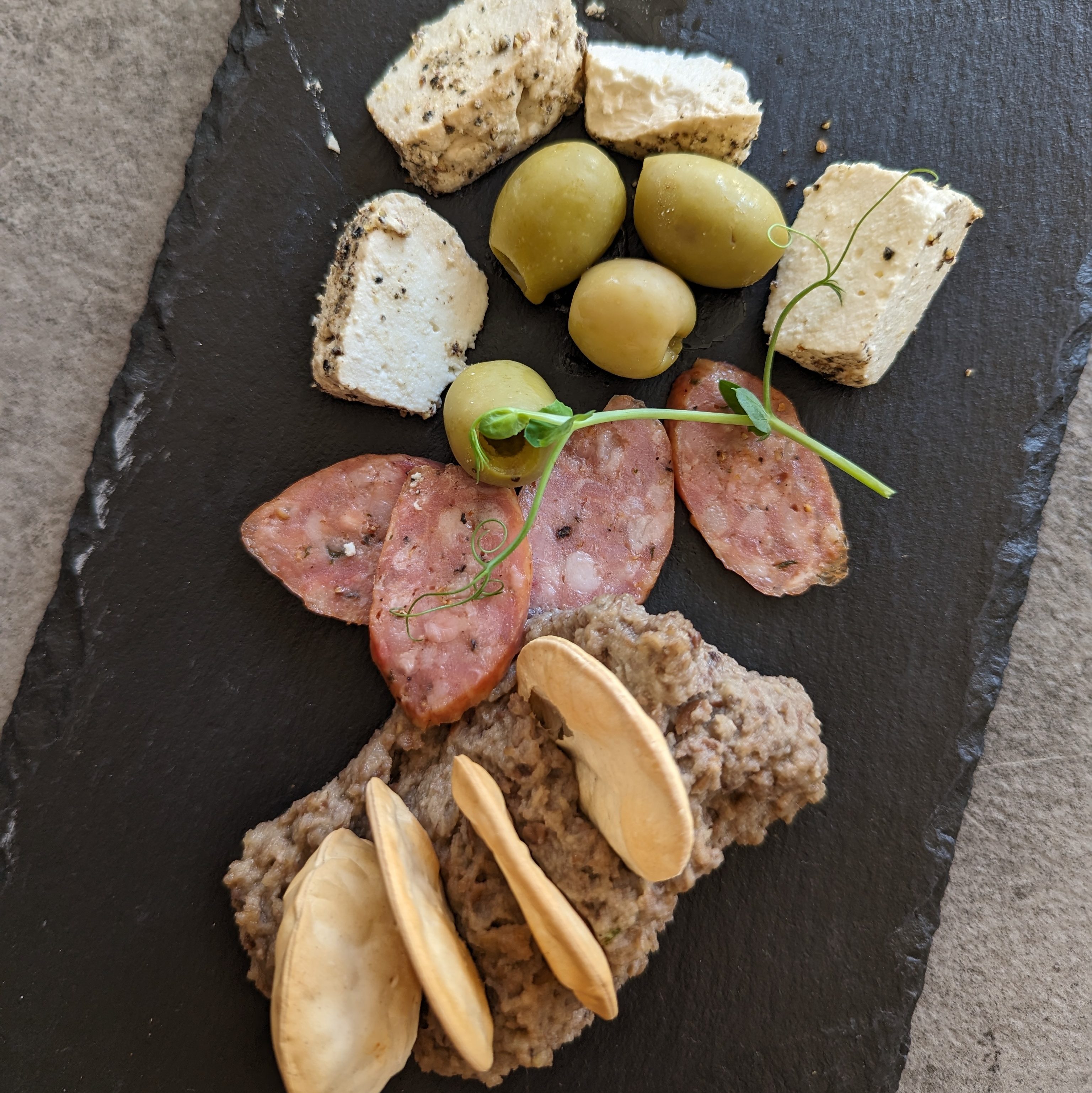
It is common for the Maltese to stuff their olives with a mixture of tuna from can, bread fresh garlic, and fresh parsley. I was intrigued, but not interested enough to buy a jar to try.
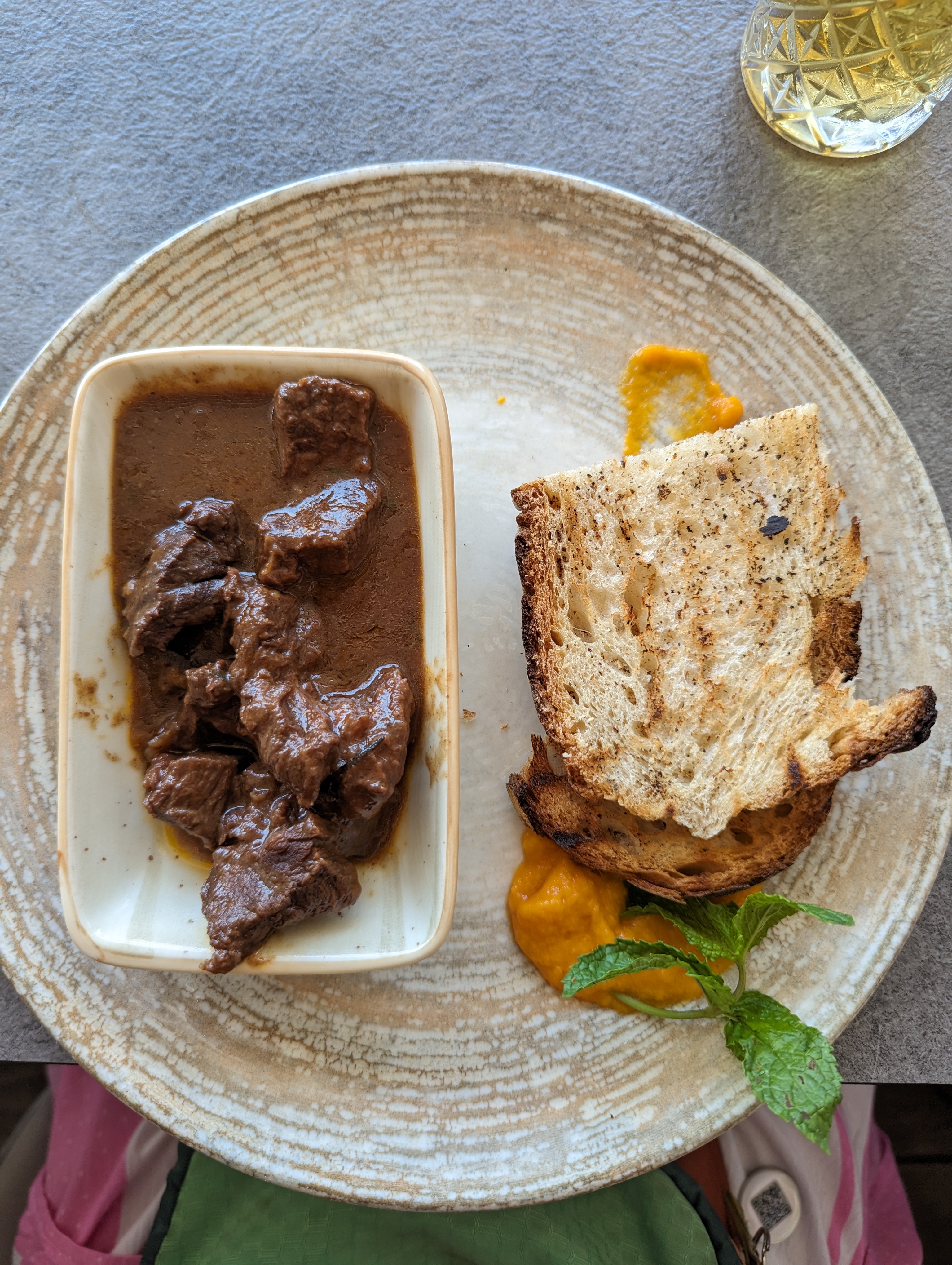
We were also served a meal of horse meat. The meat is marinated in lacto beer to soften it, and then it is slow cooked it in red wine with thyme and bay leaf. The meat was still very tough to me; I think it might have needed a third level of processing to be tender to my linking. This dish was originally a way to use the horse meat when a horse would break its leg long ago. The Maltese did not want to waste anything.
L-ikla t-tajba! (Bon appetit!)
Saħħa! (Cheers!)

 GoAmyGo
Leave a reply to Gordon Cancel reply