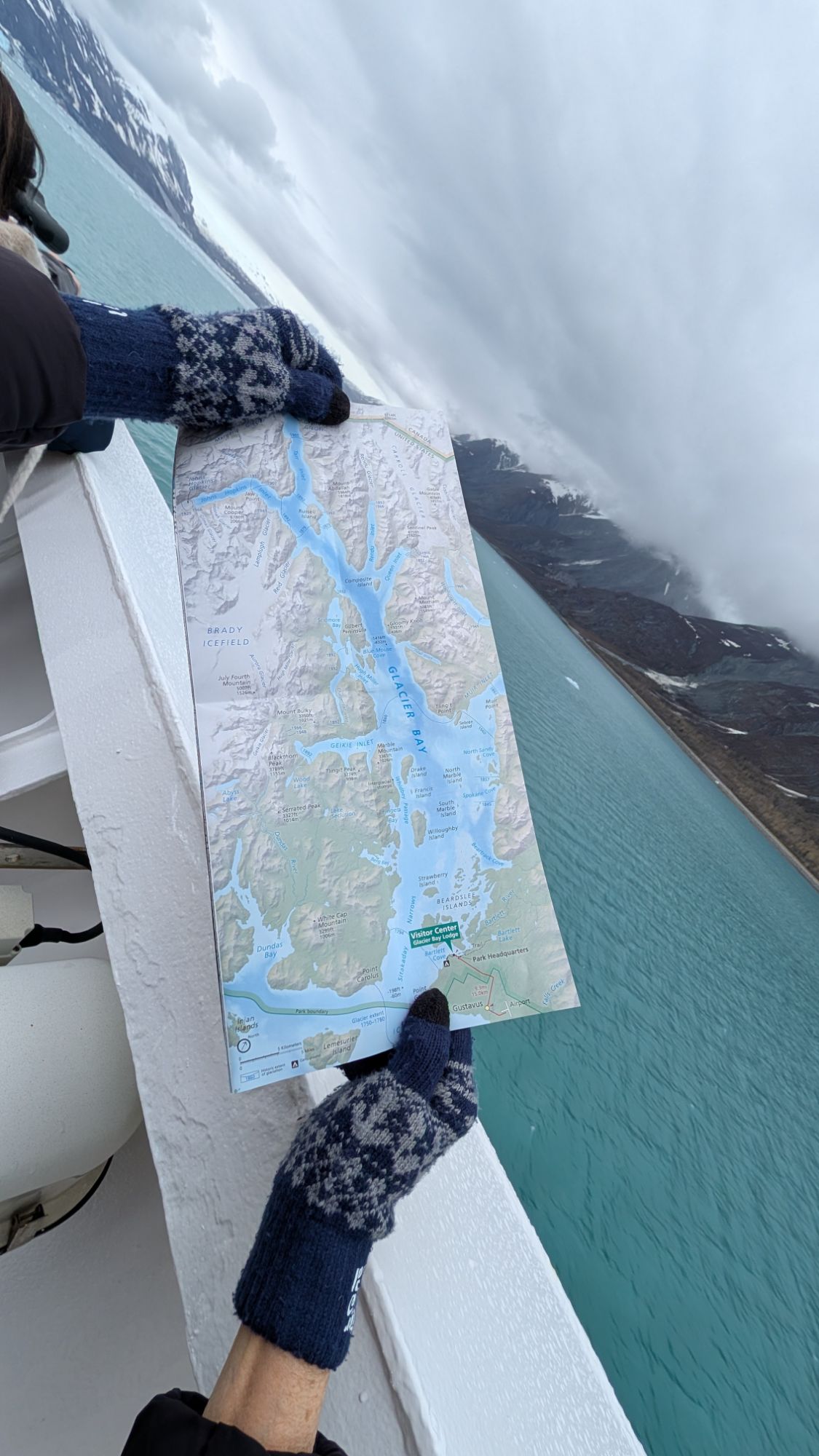
The next day we spent in Glacier Bay National Park. Park rangers and a Huna Tlingit clan member boarded our boat to provide insight and education for the day.
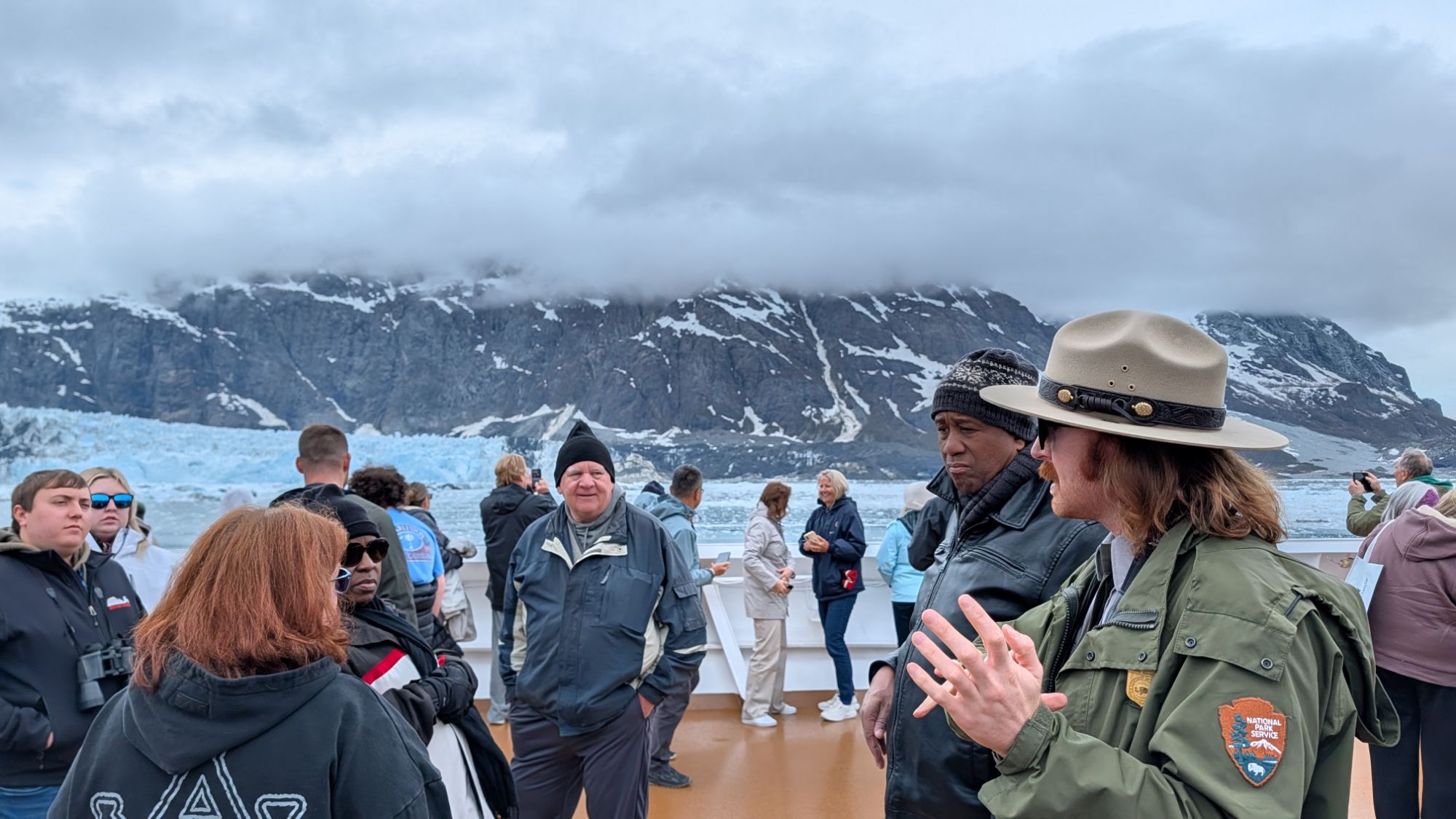
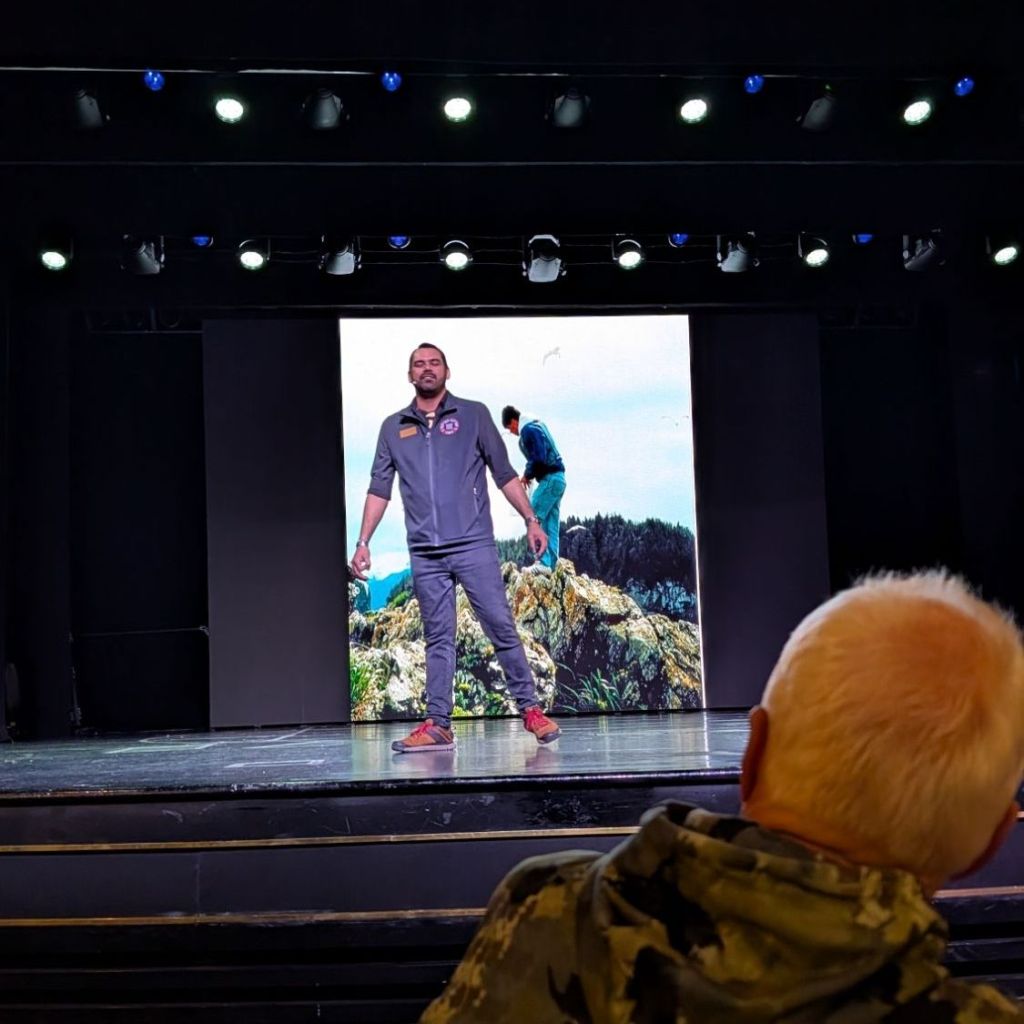
The Huna Tlingit have resided in this area since time immemorial (before memory, record, or tradition).
Glacier Bay is constantly changing and has experienced dramatic change in the last few hundred years. You can see on the map there are different markers of the years of how far the glacier retreated at that time.
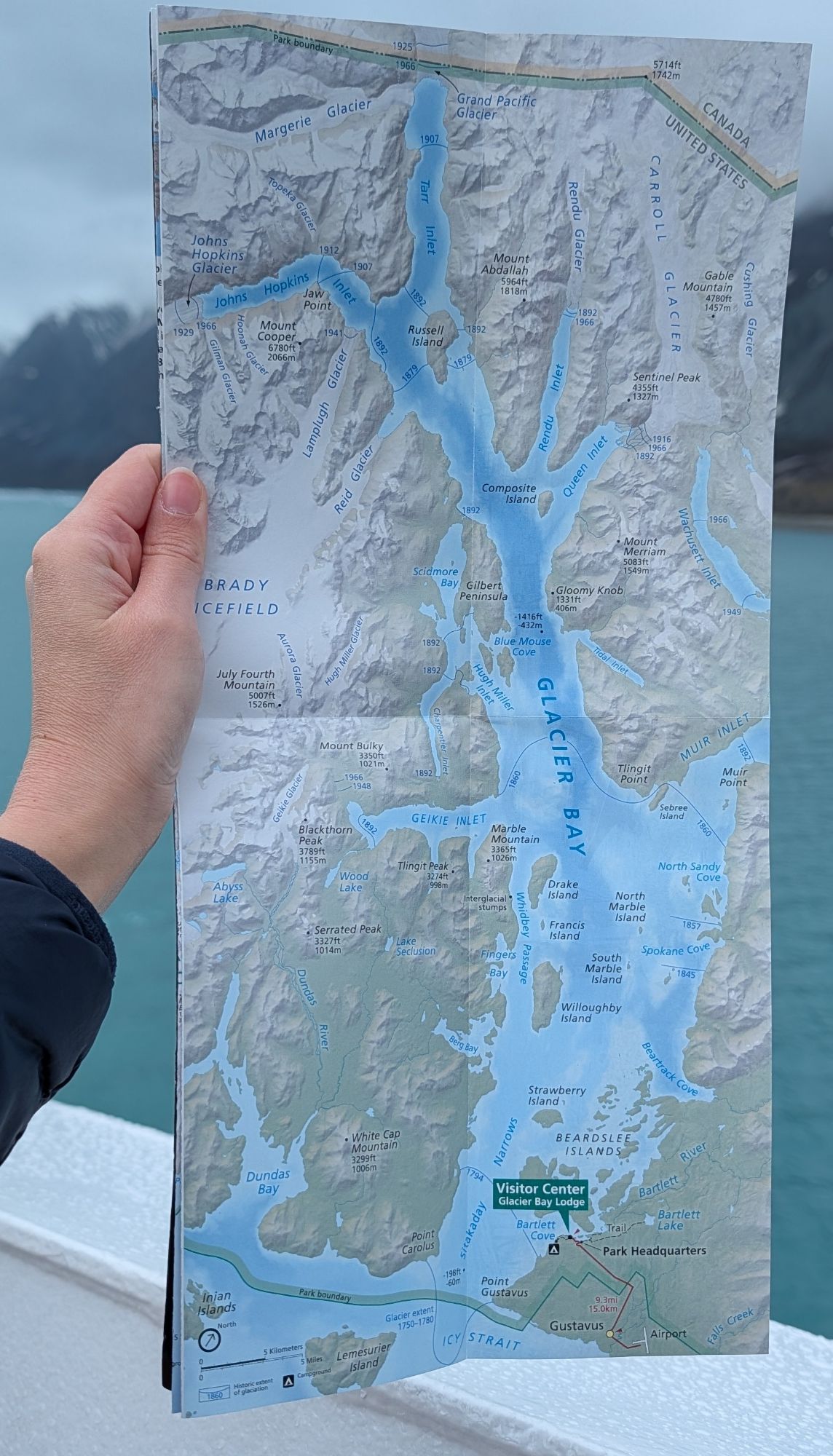
The Huna Tlingit have used different names for this area over the changes. First, it was called
“Edge of the Glacial Silt” (S’é Shuyee) because it was a lush area with a nearby glacier. It wasn’t even a bay at this time.
Then by 1750, it was called “Among the Ice” (Xáatl Tú) because the glacier moved and covered the whole bay. The glacier moved at the speed of a running dog. The Huna Tlingit people had to retreat and find a home farther away from the glacier.
Then, since around 1880, it has been called “The Bay in Place of the Glacier” (Sít’ Eeti Geiyí) because the glacier retreated quickly and formed this bay. When the glacier retreated, the Huna Tlingit came back into the bay.
Historically there was bad blood between the Huna Tlingit and the National Park Service. Both groups wanted to protect the area so could be enjoyed by future generations, but for the National Park Service, that meant restricting the Tlingit’s use of the land such as banning hunting on the land. It is a seemingly good idea to preserve the nature for future generations, but it is unfair to tell people native to the land that they no longer have access to their land or their way of life in that area. The area was declared a national monument in 1925, and made a national park in 1980.
The Huna Tlingit people consider this a “second ice age” when the government pushed them out. The first ice age was when the glacier came.
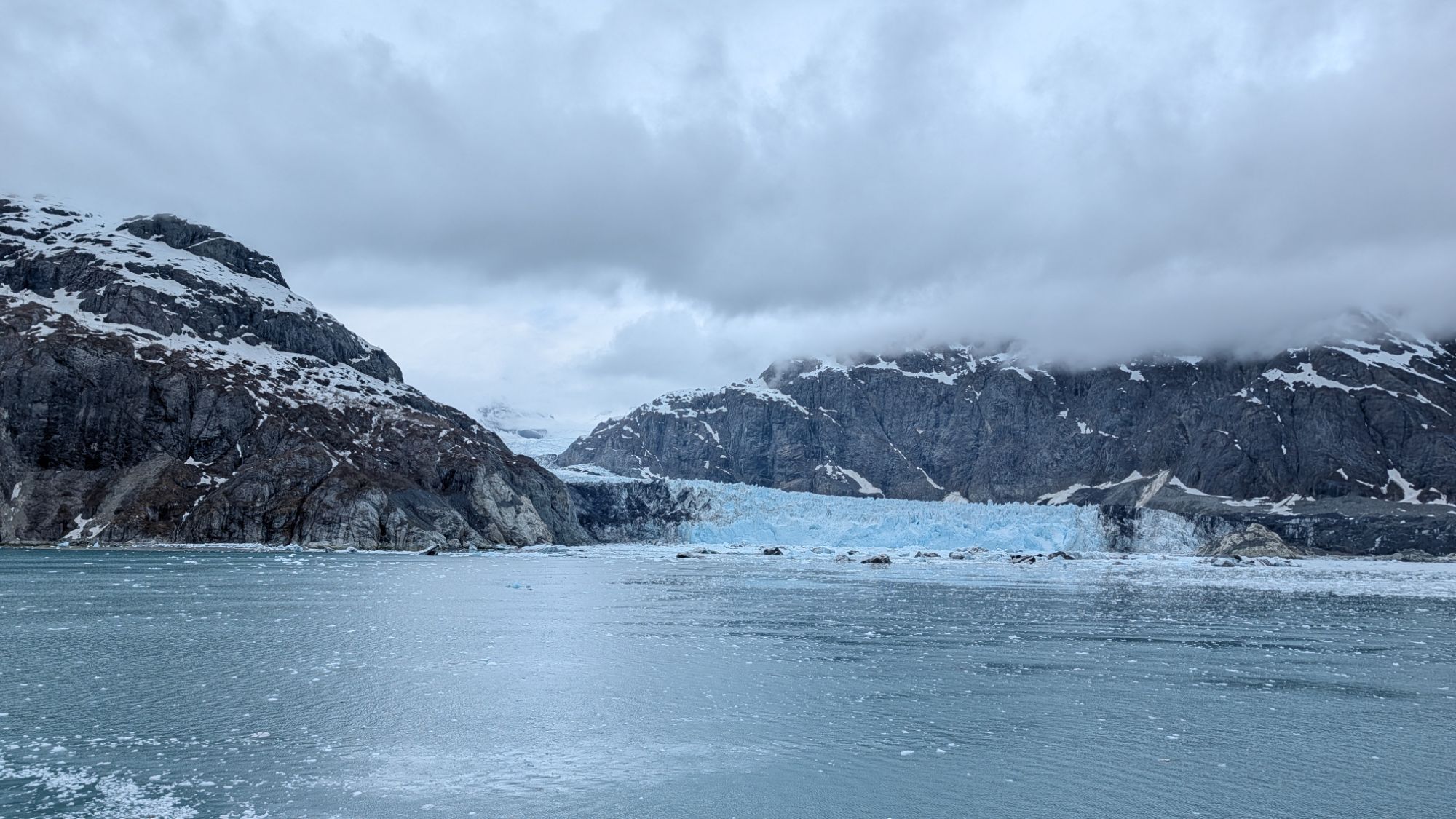
We stopped at Margerie Glacier to take in the magnificence of Glacier Bay. We saw a bit of calving. Her stats are 21 miles long, 250 feet high, 100 feet base below sea level, with a 1 mile wide face. She is generally stable and not changing much in size.
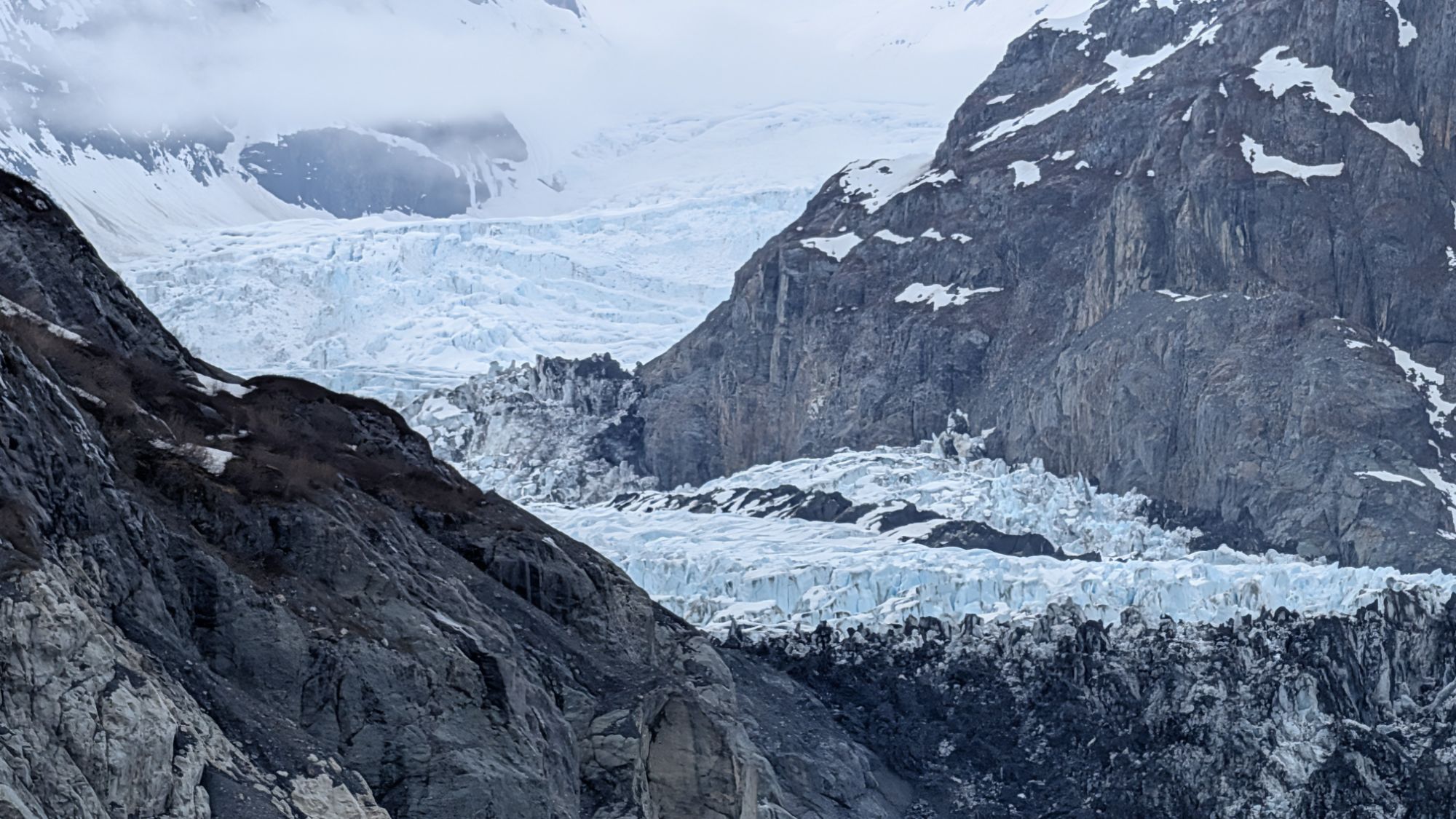
Here is a zoomed in picture where you can see the further parts of the glacier going up the mountain.
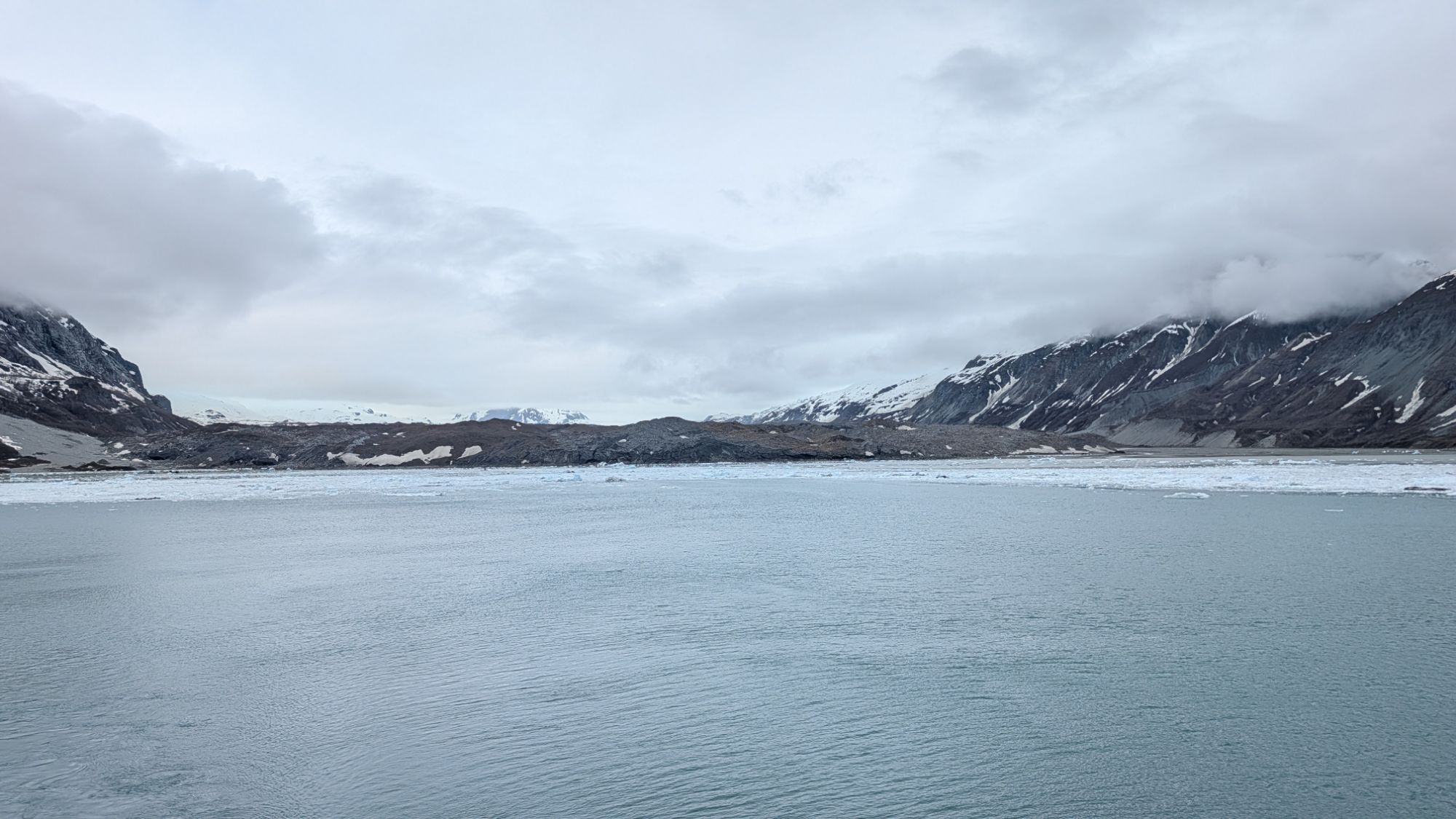
To the right of Margerie Glacier, what looks like a bunch of rock is actually a glacier too. It is the Grand Pacific Glacier and is covered in glacial silt.
Here is a zoomed in picture of the Grand Pacific Glacier.
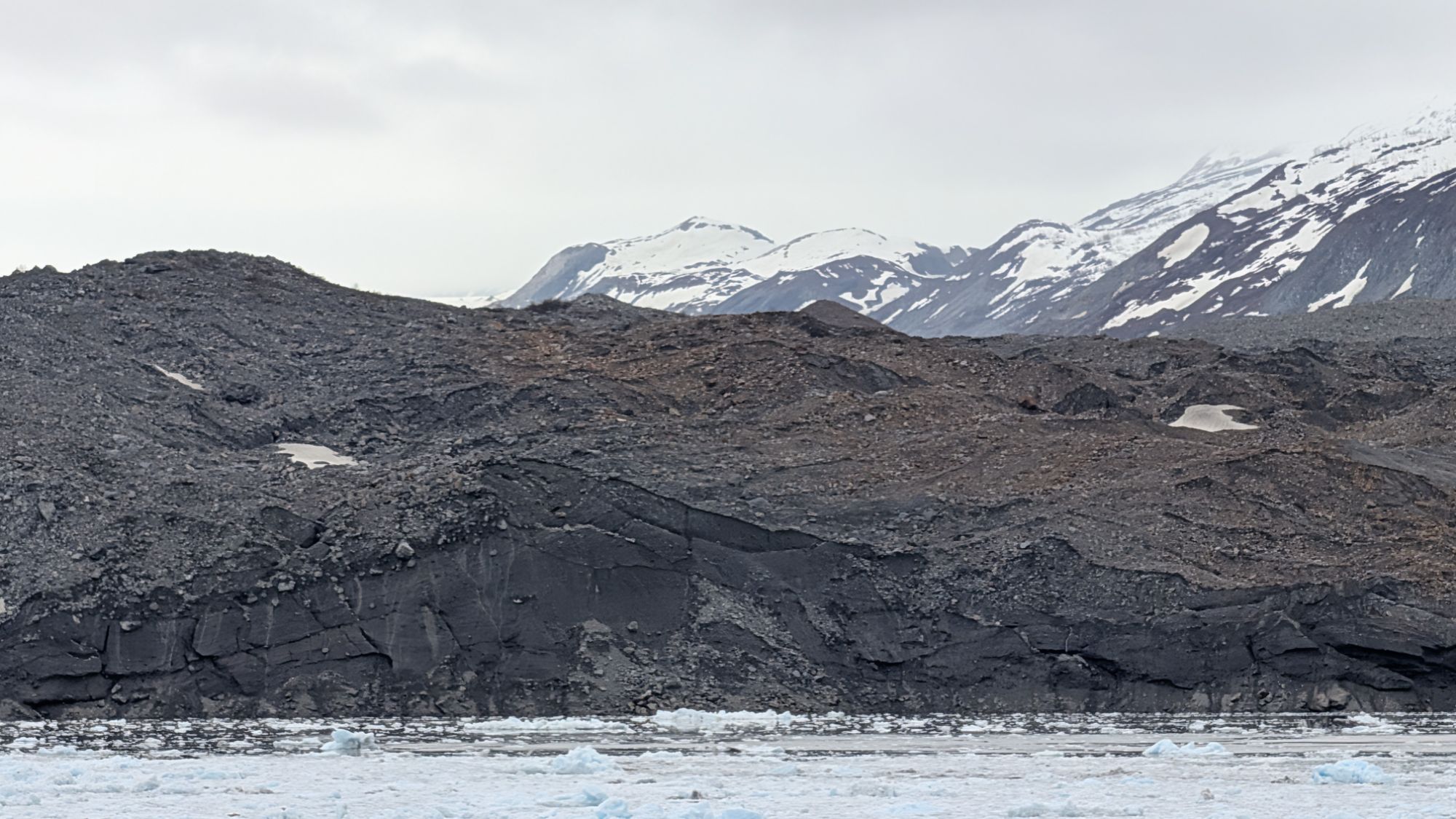
Glacial silt is formed from the rock being ground up by the friction of the glacier as it travels down the mountains. It is vital for life to begin to grow. All these minerals provide nutrients into the bay which supports a healthy environment for phytoplankton and lichens and then that leads to smaller shrubs and then small trees and then large trees. As more plants come around, the environment becomes habitable for animals on land as well as sea animals. When a glacier recedes, it is not necessarily cause for concern. Receding glaciers provide an opportunity for life to grow there. The amount of receding glaciers may be a bit concerning though.
Because change is so constant in Glacier Bay, it is a great place to conduct research on how plants colonize newly exposed ground after glacial retreat. William S Cooper started a 110 year old plant succession research in 1916, the longest study of its kind in the world. This research continues to this day.
As we traveled through Glacier Bay, more towards the entrance of the bay and less towards the glacial part, we saw some wildlife.
We spotted some mountain goats on the rocky cliffs, a bunch of sea otters sporadically floating by, and I even saw a glimpse of a whale.
Otters are so cute. They each have a favorite rock that they use as their tool. The favourite rock is, of course, stored in their armpit. Otters look like floating logs.
Here is proof that we saw otters. Otter videography is not my strong suit, and it was pretty far away.
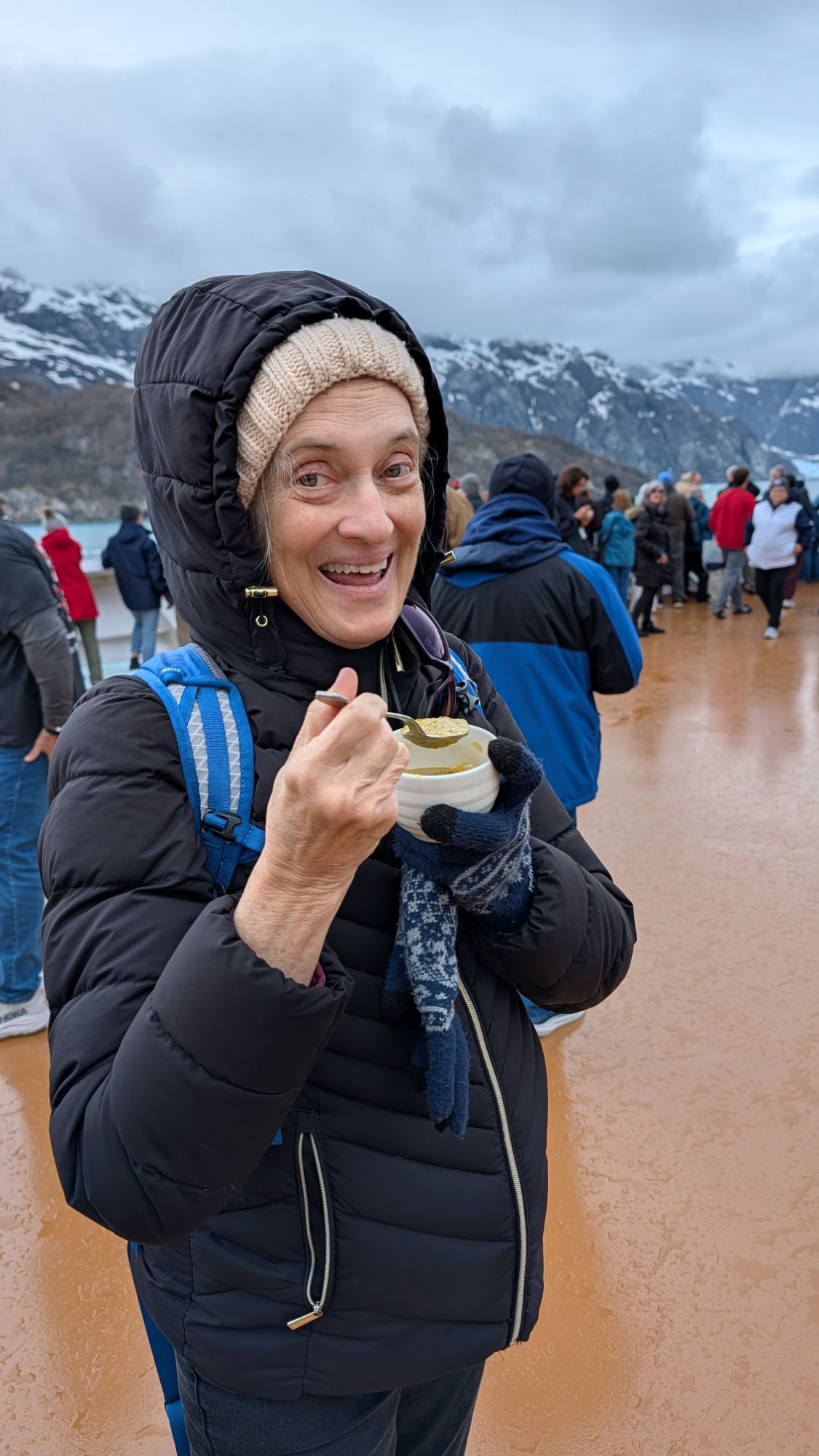
Our cruise line Holland America has a tradition to serve Dutch pea soup when we are in Glacier Bay. Yum!
Read along on my Mom’s blog rtwstreets.com to see her POV and also learn a few things that I left out!


Leave a Reply